
Ever assumed that wiring your doorbell meant dealing with a tangle of complex electrical work? Not this time. A basic low-voltage doorbell system not only enhances your home security but also adds everyday convenience. In this guide, you'll learn how to install your doorbell safely and without extra fuss. We break it down into clear, step-by-step instructions that use a low-power setup known for its reliability. With practical tips and the right safety measures, you'll be prepared to complete this project smoothly and with confidence.
Doorbell wiring Made Simple and Safe
Doorbell wiring is a simple, low-voltage project that not only boosts your home security but also adds everyday convenience. This guide covers everything, from installing a brand new system to updating or troubleshooting an existing one. Using low-voltage circuits (16–24 VAC) means you can set up a reliable alert system without the risks of high-power electricity. Whether for your home or business, this method provides dependable notifications and blends nicely with your entry setup.
Before you start, always switch off the power at the circuit breaker. This important step helps prevent electric shock and protects both you and your equipment. Check that the power is truly off by using a non-contact voltage tester on any accessible wire. It’s also smart to label your existing wires and verify the transformer's output to avoid any mix-ups later. Taking these precautions makes sure your doorbell installation is safe and efficient and follows best practices for low-voltage cabling.
A typical doorbell setup includes three key components: the transformer, the chime unit, and the push button. The transformer reduces household voltage down to a safe 16–24 VAC and is usually mounted near the electrical junction box. The chime unit, which is wired to the transformer, is what makes the sound when you press your doorbell. By using the right hardware and following proper doorbell power guidelines, you not only create a reliable system but also set the stage for future smart doorbell upgrades.
Doorbell Wiring Components and Materials Checklist

Getting your doorbell wired properly is a lot easier when you have the right parts and tools ready. When setting up your doorbell system, whether it’s a new installation or an upgrade, a clear checklist helps you work safely and confidently.
- Doorbell chime unit
- Doorbell push button
- Step-down transformer
- Multimeter
- Screwdriver set
- Non-contact voltage tester
Each tool has its role. A multimeter makes sure the voltage is safe before you start, while a non-contact voltage tester helps verify that the power is off. Using a quality screwdriver set ensures all your connections stay tight and secure. Together, these components and tools keep your wiring project straightforward, safe, and reliable.
Reading Doorbell Wiring Diagrams and Electrical Schematics
Knowing how to read doorbell wiring diagrams is important when you install or troubleshoot your entry system. These diagrams explain how power runs through the setup, including the transformer, chime, and push button. Typically, you'll see the transformer connected to the terminal labeled "TRANS" on the chime, while the doorbell button wires attach to the "FRONT" terminal. Most diagrams follow a three-wire layout: live (black), neutral (white), and ground (green). Whether you have one button with a single chime, two buttons with one chime, or two buttons with two chimes, these visuals clear up the role of each connection.
| Configuration | Transformer-Chime | Button-Chime |
|---|---|---|
| Single button | TRANS → Chime | Button → FRONT |
| Dual buttons single chime | TRANS → Chime | Button1/2 → FRONT |
| Dual buttons dual chimes | TRANS → Chime A/B | Button1 → FRONT A; Button2 → FRONT B |
These diagrams use clear labels to tell you where each wire should go. For example, when you see "TRANS" on the chime, it shows where the transformer connects to supply the safe 16–24 VAC. Likewise, the "FRONT" label tells you that the button wires complete the circuit. In systems with dual chimes, labels like FRONT A and FRONT B show which wire belongs to each button. Making sure your wiring follows these labels keeps your doorbell system safe and working properly.
Step-by-Step Doorbell Wiring Process
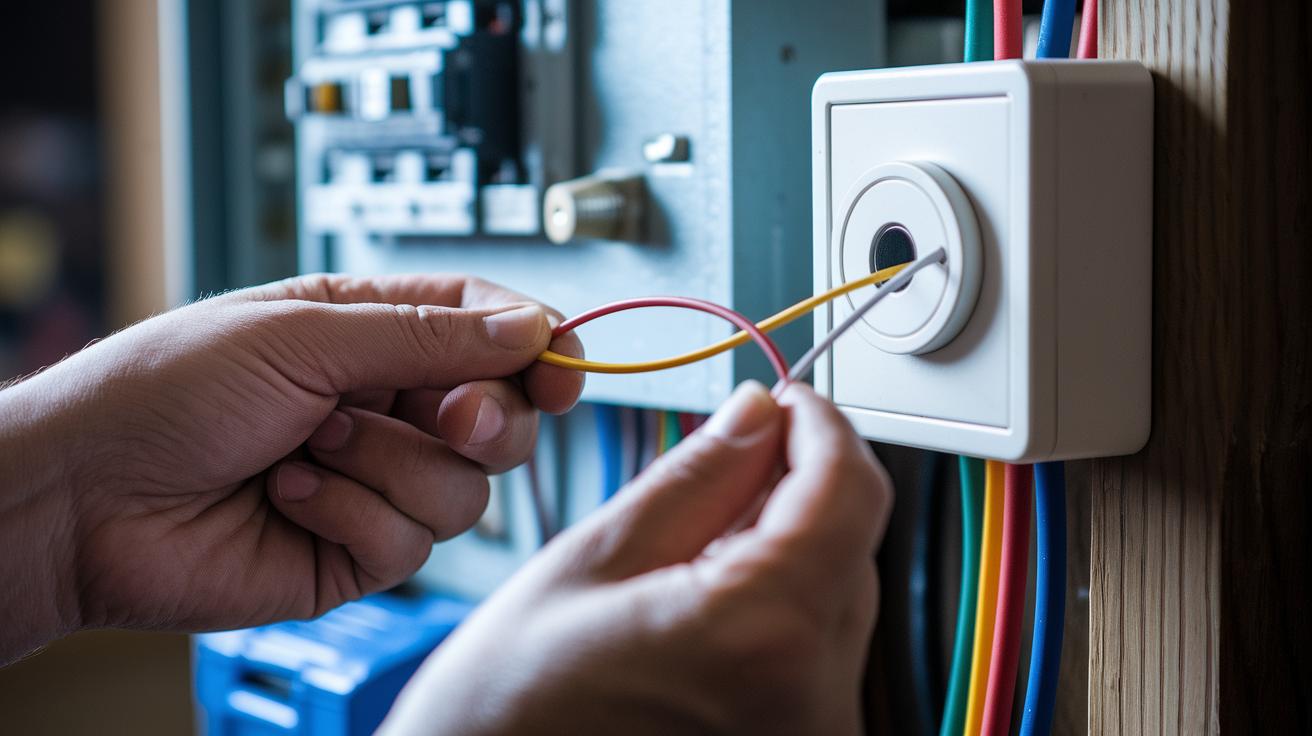
Start by turning off the power at your breaker panel. This step keeps you safe during the task. Next, label and disconnect the old doorbell wires so you know which wire goes where.
Once that’s done, mount your transformer close to the electrical junction box. Then, strip off about 3/8 inch of insulation from the wire ends to make a proper connection.
Run your low-voltage cable from the transformer to the spot where you want your push button. When it comes time to hook things up, connect the wires from the transformer to the chime and attach the button’s wires to the chime’s front terminal.
After you’ve connected everything, restore power and press the doorbell button to see if the chime sounds. It’s important to check that your transformer outputs between 16 to 24 VAC. Use a multimeter for safety and to make sure the voltage is right. Also, double-check that all wires are secure and free of loose or exposed strands that might cause a short or intermittent contact.
If your new chime model needs a different voltage, replace the transformer to match its requirements. Taking the time to follow these steps carefully will help ensure your doorbell system stays reliable and works well for years to come.
Doorbell Wiring Troubleshooting and Testing
When your doorbell isn’t working right, start by checking the basics. Use a multimeter to make sure the transformer is putting out the proper 16–24 VAC. Next, run a continuity test on the wiring and button contacts to spot any loose or corroded connections. This hands-on approach helps you confirm that each component is in good shape and quickly zero in on the problem.
| Issue | Diagnostic Step | Solution |
|---|---|---|
| No chime sound | Measure voltage at the transformer | Replace the transformer or inspect the breaker |
| Weak chime | Examine wire gauge and tighten connections | Secure the terminals or upgrade to 18 AWG cable |
| Intermittent ring | Perform a continuity test on the button contact | Clean or swap out the push button |
If these steps don’t solve the issue or if you’re not comfortable working with electrical components, it’s a good idea to call a licensed electrician. They can ensure the wiring meets safety standards so your doorbell keeps working reliably.
Upgrading Doorbell Wiring for Smart Doorbells

Smart doorbells, like those from Ring or Nest, need a transformer that provides 16–24 VAC. If you're upgrading from an older doorbell, you can usually stick with your current low-voltage circuit. When laying new wiring isn't a good option, a PoE injector can power your smart doorbell through Ethernet. This approach makes installation simpler and delivers consistent power, which is great for devices like the Reolink PoE doorbell that supports 5 MP HD video.
Wired smart doorbells use familiar low-voltage circuits tied to your existing transformer, ensuring they get constant power and steady performance. In contrast, Wi-Fi models lean on battery backup and a wireless connection. That means while they save you the hassle of rewiring, you'll need to recharge the battery regularly. In the end, your decision comes down to your current setup and whether you’re okay with a bit of extra maintenance.
Doorbell Wiring Safety Precautions and Code Compliance
Before you start any doorbell wiring work, turn off your main breaker. Then use a non-contact voltage tester to double-check that no power is running. This simple step helps prevent shocks when you work with low-voltage parts. Stick to National Electrical Code rules for low-voltage circuits so you stay safe and your wiring meets all standards. Making sure the power is really off gives you a safe space to handle doorbell components and insulated cable connectors.
Following the rules means more than just cutting the power. It also means choosing the correct insulated connectors and carefully securing every connection. A multimeter is a useful tool to spot any issues early on. These safety checks help you build a reliable system that avoids shocks and electrical interference while staying in line with guidelines.
Grounding Best Practices
- Identify the grounding conductor on the transformer.
- Find the closest junction point that is properly grounded.
- Clean both surfaces where the connection will be made.
- Firmly attach the grounding conductor using an insulated cable connector.
- Check the connection with a testing device to make sure it’s grounded correctly.
Final Words
In the action, this post walks you through every step of installing a doorbell system, from safety measures and power shutdown to component selection and wiring diagrams. It offers hands-on tips on proper connections, troubleshooting, and adapting for smart doorbells.
We've laid out clear procedures and checks so you can work confidently on your project. With these guidelines, doorbell wiring becomes a straightforward task to boost your home security and convenience.
FAQ
What does a doorbell wiring kit include?
A doorbell wiring kit includes essential components such as a transformer, chime unit, push button, and low-voltage wires, providing a ready-to-use package for installing a safe doorbell system.
What do doorbell wiring diagrams show, including single doorbell and 4-wire configurations?
Doorbell wiring diagrams illustrate the connection among the transformer, chime, and push button. They detail both single-button setups and 4-wire configurations, using clear labels to indicate each terminal’s role.
How do you wire a doorbell with 2 wires?
Wiring a doorbell with 2 wires means connecting a pair from the transformer to the chime and push button. The two wires carry the low-voltage current needed to trigger the doorbell sound.
What do doorbell wiring colors indicate, such as red and white?
Doorbell wiring colors like red and white help differentiate connections in the system. They serve as guides to ensure each wire is attached to the correct terminal according to the wiring diagram.
How is Ring doorbell wiring handled differently?
Ring doorbell wiring often requires a compatible transformer and specific connectors designed for smart doorbells. The setup adapts traditional wiring methods to support innovative features like HD video and wireless connectivity.
How is a typical doorbell wired and what wires are used?
A typical doorbell is wired using low-voltage cables, generally between 16–24 VAC. It uses a combination of wires—usually grouped by color—to connect the transformer, chime, and push button safely.
Do I need an electrician to wire a doorbell?
While many homeowners can safely install a doorbell by following clear instructions, hiring an electrician is advisable if you feel unsure about handling electrical components or ensuring code compliance.
What are the common doorbell wiring issues?
Common wiring issues include a lack of proper voltage, loose connections, and corrosion at terminals. Using a multimeter to check transformer output and verifying tight, clean connections can help resolve these problems.