
Ready to upgrade your home audio? Soundbars promise a clean, simple solution that boosts your TV's sound without taking up much space. But if you crave immersive, room-filling sound with the flexibility to position speakers perfectly, a full speaker system might be the better choice. In this guide, we break down how easy each option is to install and the kind of audio experience you can expect, so you can pick the setup that truly fits your home.
Soundbar vs Speakers: Direct Comparison for Your Audio Needs
Soundbars pack several speaker types, tweeters, midranges, and subwoofers, into one slim unit that quickly boosts your TV's sound. They’re built for simplicity and work great if you want clearer dialogue and a richer background without dealing with a jumble of cables or extra gear. On the other hand, traditional speaker setups come with separate pieces such as front, center, and surround speakers along with a dedicated subwoofer, all hooked up to an amplifier. This arrangement caters to those wanting a fine-tuned audio experience with better sound placement and a more enveloping feel.
Soundbars are loved for their easy setup. You can just place one under or above your TV and hook it up with an HDMI ARC or optical cable for a nearly instant upgrade, often with handy auto-calibration features. In contrast, a full speaker system demands careful positioning and wiring for each speaker, plus manual adjustments to bring out the room-filling sound you’re after.
| Feature | Soundbar vs Speaker System |
|---|---|
| Setup Complexity | Easy, plug-and-play |
| Soundstage & Surround | Simulated surround for smaller spaces |
| Bass Performance | Decent bass, but not as deep as a dedicated subwoofer |
| Space Required | Compact footprint |
| Upgrade Path | Fixed design with limited expansion |
If you value a quick, tidy setup and a look that doesn’t crowd your space, a soundbar is a great choice for everyday TV watching and casual music sessions. However, if you’re after a personalized, room-filling sound with true surround effects for movie nights, you might lean toward a full speaker system.
Installation and Setup: Soundbar vs Traditional Speakers
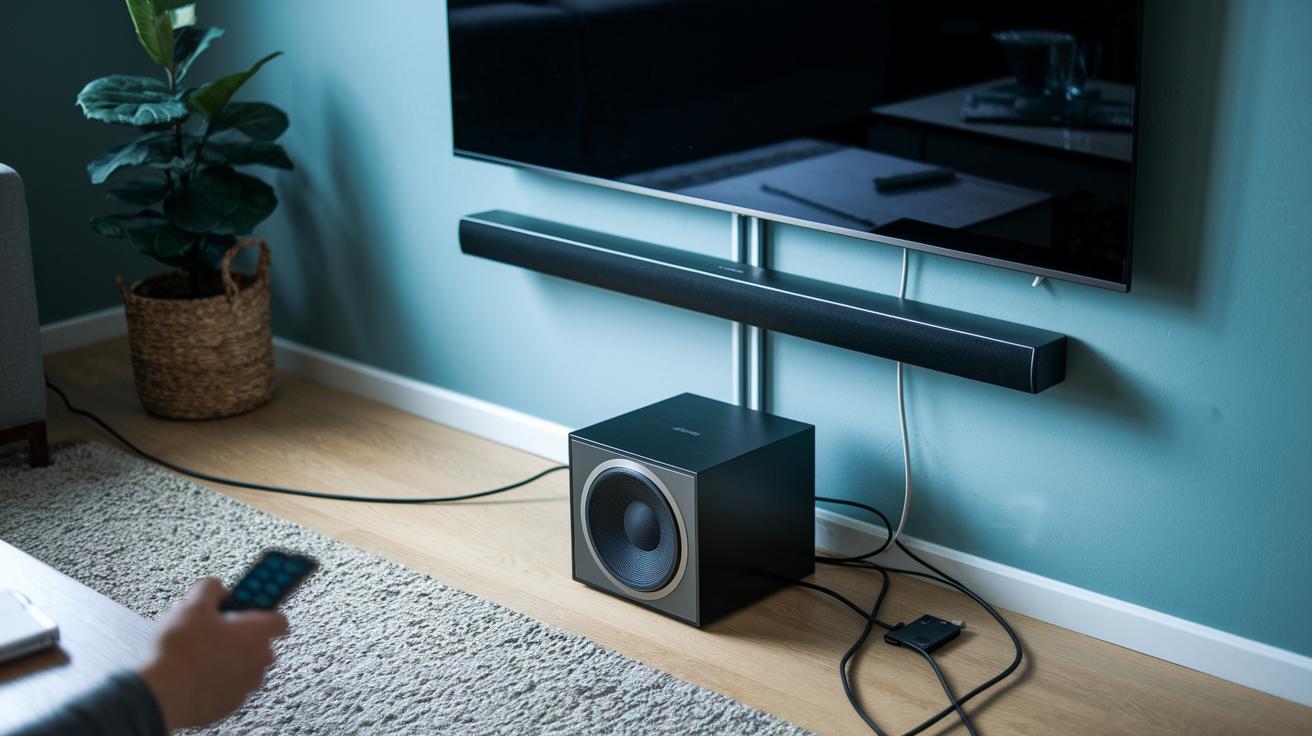
Setting up your soundbar is a breeze. Start by placing it either under or above your TV so the sound reaches you perfectly. Then, connect it to your TV using the HDMI ARC/eARC port; if you don't have HDMI available, an optical cable works too. Once everything's hooked up, turn on the auto-calibration feature (often called room EQ) so it tunes the sound for your space. And if your soundbar comes with a wireless subwoofer, pair it via Bluetooth to boost the bass.
On the other hand, installing a traditional multi-speaker system takes a bit more planning. Begin by positioning each speaker in its intended spot, front, center, rear, and subwoofer. Next, run the speaker cables from each speaker to your AV receiver, making sure every connection is secure. You can then mount the speakers using stands or wall brackets to achieve the best listening height. Finally, perform a calibration. This can be done manually or with automatic systems like Audyssey or Dirac LN2, ensuring that all channels blend well and the sound remains clear.
The trade-off here is between simplicity and customization. A soundbar setup is quick and user-friendly with minimal connections and smart auto-calibration. Meanwhile, a traditional system requires more effort with wiring and manual adjustments, but it can deliver a highly personalized, room-filling sound experience.
soundbar vs speakers: Stellar Audio Delight
When it comes to audio performance, a key difference lies in frequency range. Soundbars usually cover 55 Hz to 20 kHz, which works well for everyday TV watching and casual music sessions. Traditional speakers like bookshelf or floorstanding models go from 40 Hz to 40 kHz. This extra range means they can deliver deeper bass and crisper highs. Many of these systems also include dedicated subwoofers, offering that tight, punchy bass perfect for movies with booming sound effects.
Soundstage and imaging further separate the two. Traditional speakers benefit from precise placement that creates distinct left–right separation and a naturally spacious feel. Even though Dolby Atmos soundbars use upward-firing drivers to simulate height, they don’t quite match the immersive detail of a full 7.1.4 setup. With separate speakers, the soundfield mirrors on-screen action accurately, making the audio feel lively whether you're watching a film or listening to music.
When you look at total harmonic distortion (THD) numbers, the differences become clear. Top-tier speaker setups typically deliver THD below 0.5%, ensuring your audio remains crisp even in complex passages. Soundbars generally have THD figures around 0.7% to 1.0%, which might be noticeable during louder or intricate moments. In short, while soundbars offer a compact and convenient solution, traditional speaker systems excel in creating an immersive, high-fidelity audio experience that’s hard to beat.
Design, Size, and Aesthetic Appeal of Soundbars vs Speakers

Soundbars are made to look clean and modern. They usually measure between 30" and 50" long and keep a low profile of 2" to 4" in height. With a slim design often finished in matte black or accented with metal, they blend neatly into your TV setup. You can simply place one on your media console or mount it beneath your TV, keeping your space both stylish and uncluttered. Their straightforward style adds a minimalistic charm that fits well with many living room decors.
Traditional speakers, however, need a bit more room and careful planning. Bookshelf speakers typically measure about 10" to 12" wide with a depth of 6" to 8", while floor-standing speakers can be 10" to 15" wide and stand as tall as 40" to 50". They come in various finishes, like grills, veneer, or lacquer, that give them a unique personality. These speakers usually require special stands, wall mounts, or dedicated floor space. This setup not only makes a visual statement but also lets you customize the placement to match your room’s ambiance.
Use-Case Scenarios: When to Choose a Soundbar or Speaker System
When you're settling in to watch movies or TV shows, a soundbar is a great pick. It delivers virtual surround sound that makes dialogue clearer, and you can easily place it right below or above your TV. Plus, its auto-calibration adjusts the audio to fit your room, giving you that cinema feel without a bunch of extra gadgets.
If music is more your scene, a stereo or 2.1 speaker setup might be the better choice. These systems separate instruments more clearly and offer a wider dynamic range, so you get real stereo imaging that brings out every nuance of your favorite tracks. For those who crave detailed, hi-fi sound, dedicated speakers can provide a richer experience than a soundbar.
When it comes to gaming, many soundbars now come with low-latency HDMI inputs. This means your in-game sounds sync up perfectly with the action. Some even simulate surround sound, directing cues accurately to give you that competitive edge by keeping audio delays to a minimum.
For PC or desktop use, compact soundbars fit neatly under your monitor and boost everyday sound. However, if you need that pinpoint, studio-grade detail for editing or critical listening, separate studio monitors or bookshelf speakers will serve you best. They deliver precise, clear sound that perfectly complements your desktop setup.
Cost and Long-Term Value: Comparing Prices of Soundbars vs Speaker Systems
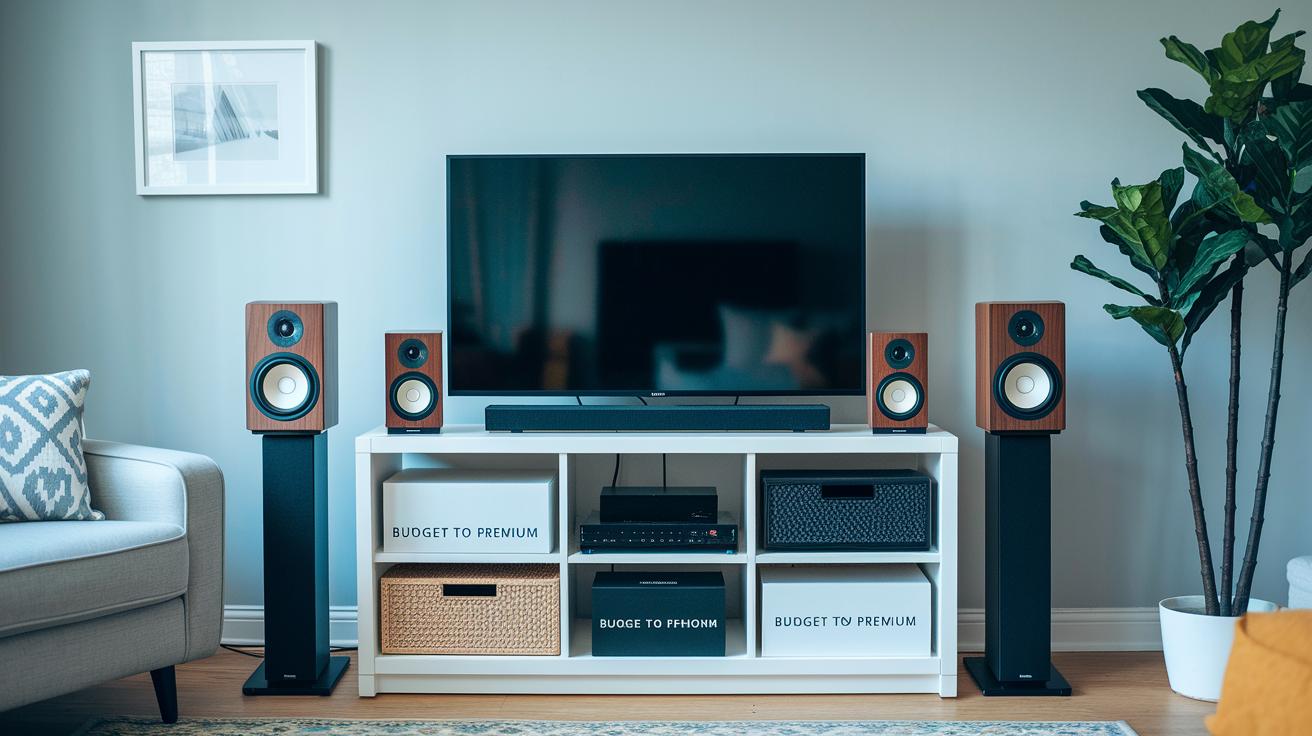
For those on a budget, entry-level soundbars usually cost between $80 and $150, which makes them a quick way to boost your TV's sound. Mid-range soundbars hit the $200 to $500 range, while premium models with Atmos tech run over $600. On the flip side, a basic 2.0 or 2.1 bookshelf speaker set will often run between $300 and $600, and a full 5.1 home theater kit can cost anywhere from $500 to $2,000. Keep in mind that these home theater kits usually require an AV receiver, which can add another $200 to $800. One advantage of speaker systems is that you can gradually upgrade parts, like swapping out drivers, adding subwoofers, or improving amplifiers. Soundbars, with their fixed design, don't offer this upgrade flexibility.
When it comes to long-term value, quality speaker drivers can last more than 10 years, making them a solid investment if you plan to upgrade little by little. Meanwhile, soundbars, despite being budget-friendly initially, may need to be replaced in 5 to 7 years as firmware support ends and parts wear out. This shows the key trade-off: you save money up front with a soundbar, but a speaker system might give you better longevity.
Final Words
In the action, we compared core elements of soundbar vs speakers for audio setups that match different lifestyles.
We broke down design, setup, performance, and cost in clear terms.
Our review showed that soundbars offer a simple, compact solution while speaker systems deliver detailed, immersive sound.
Practical factors like room size and long-term value drove each option's appeal.
By weighing these insights, you can decide which system fits your space, budget, and listening habits best. Enjoy your new sound system, and happy listening!
FAQ
What does the discussion on Reddit say about using soundbars versus speaker systems for PCs?
The conversation indicates that soundbars offer a compact, plug‑and‑play solution for PC setups, while traditional speaker systems deliver detailed sound immersion with discrete drivers, ideal for users who prioritize audio depth.
How do soundbars compare to Bluetooth speakers and dedicated gaming sound solutions?
The comparison shows soundbars are designed to enhance TV audio with virtual surround effects, while Bluetooth speakers emphasize portability, and gaming systems focus on low latency and precision audio cues for an immersive experience.
How do built‑in soundbars differ from full home theater speaker systems or setups for apartments?
Built‑in soundbars provide a minimal, integrated design suited for smaller spaces, whereas full home theater systems offer separate channels for a more immersive soundstage, often requiring larger areas and more complex setups.
Which is better: a soundbar or a speaker system?
The choice depends on your needs; a soundbar offers simplicity and space-saving design, while a speaker system delivers customizable, richer sound. Your priorities in room size, setup ease, and audio quality will drive the decision.
What disadvantages should buyers consider when using a soundbar?
The disadvantages include limited surround sound realism, less impactful bass compared to a dedicated subwoofer, and reduced customization options, meaning it might not perform as well in larger rooms or for audiophiles seeking detailed sound dynamics.
Do soundbars replace TV speakers, or should additional speakers be added?
Soundbars are designed to replace built‑in TV speakers by significantly improving sound quality, though adding extra speakers can further enhance surround sound if you desire a deeper, more immersive audio experience.
Which popular soundbar models offer standout features?
Popular options such as JBL Bar 9.1, Sonos Beam, Sonos Arc, Samsung HW‑Q990D/F, and Bose Smart Ultra Soundbar each bring unique features like wireless sub‑woofers, Dolby Atmos support, and smart connectivity to cater to various needs and setups.