
Ever wondered if over-ear headphones really deliver better sound than in-ear ones, or if that’s just hype? Audio fans often fall into two camps. Some believe over-ear headphones give you a concert-like feel, while others like in-ears for their tight, focused sound. In this review, we break down both styles to share what works best in real-life use. Read on to see which option might bring you the ultimate listening experience.
Audiophile Over-Ear vs In-Ear: Comprehensive Comparison for High-Fidelity Listening
Over-ear headphones create a wide soundstage that feels like you're sitting in a live concert. Their larger drivers deliver rich, full-range audio that surrounds you with detailed sound. They also cover your ears completely, which naturally cuts down on outside noise and gives you a true, room-filling experience.
On the other hand, in-ear headphones sit snugly in your ear canal and focus on clear, punchy bass. They seal your ears tightly to block ambient sounds, making them great for hearing every little detail with minimal distortion. Audiophiles who want precision in every note often pick these for their focused, intimate sound.
If you spend time in a home studio or enjoy long, critical listening sessions, over-ear headphones are usually the best pick because they offer comfort and immersive audio over long periods. Their consistent, rich sound makes them ideal for mixing or mastering music. However, in-ear models are perfect for active use like commuting, workouts, or live performance monitoring. They are highly portable and provide a strong seal against background noise.
In short, if you want to enjoy a full, dynamic range in a controlled setting, over-ear headphones might be right for you. But if you need something compact for on-the-go listening without distractions, in-ear monitors are a strong choice.
Audiophile Over-Ear vs In-Ear: Sound Quality and Technical Spec Breakdown
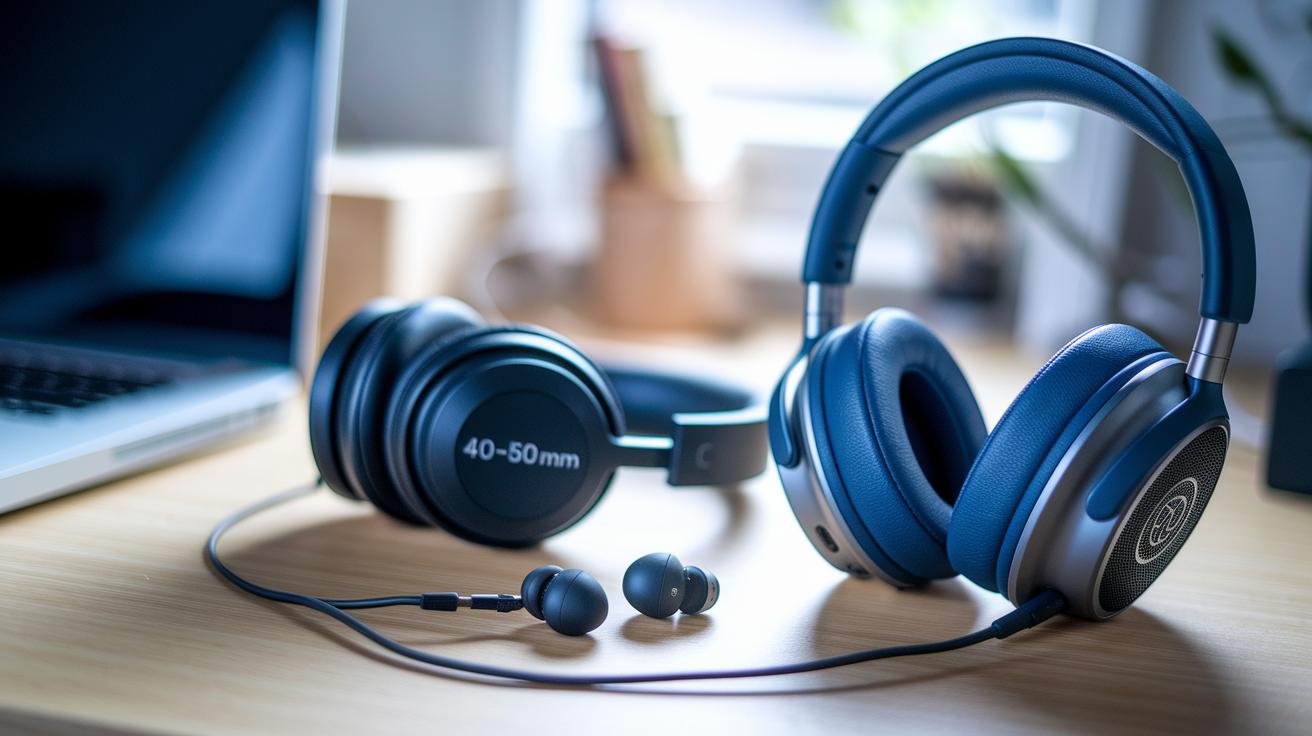
When it comes to sound quality, features like driver size, impedance, sensitivity, and frequency range make a real difference. Over-ear headphones usually pack 40–50 mm drivers that cover a wide range from 5 Hz to 40 kHz while keeping distortion low. With sensitivity between 95 and 110 dB at 16–300 Ω, they deliver a rich sound that fills your room.
In contrast, in-ear monitors mix dynamic and balanced armature drivers to target a narrower frequency range of 20 Hz to 20 kHz. Their high sensitivity of 100–120 dB at 10–50 Ω helps catch fine details and fast transient sounds that are essential for precise listening.
| Feature | Over-Ear Example | In-Ear Example |
|---|---|---|
| Driver Size | 40–50 mm dynamic drivers | Dynamic and/or balanced armature drivers |
| Frequency Range | 5 Hz–40 kHz | 20 Hz–20 kHz |
| Sensitivity/Impedance | 95–110 dB at 16–300 Ω | 100–120 dB at 10–50 Ω |
These technical differences shape distinct listening experiences. Over-ear headphones create a broad, enveloping soundstage that immerses you in music, though they might not always capture the tiniest fleeting sounds. In-ear monitors, on the other hand, shine when you need crisp detail and clarity during close, analytical listening.
Ultimately, the choice depends on your needs. If you want a room-filling, lush sound, over-ear headphones are a great pick. But if you value pinpoint precision and portability, in-ear monitors might be the better option.
Audiophile Over-Ear vs In-Ear: Pure Audio Bliss
Over-ear headphones usually weigh between 250 g and 350 g. They come with soft, cushioned earcups that spread pressure evenly. These wide earcups wrap around your ears for long, comfortable listening sessions. At the same time, they might trap some heat during long use. The headband and cushion materials are picked for both durability and softness, keeping the pressure light on your head. This setup works well for studio sessions where steady comfort is key, even if the weight and warmth can feel like a trade-off on hotter days.
IEMs weigh less than 15 g and rely on foam or silicone tips for a secure, comfy fit. The seal and how deep you insert the tip are very important to comfort. The wrong tip or a poor fit can create pressure points that lead to fatigue after a short time. It helps to try different tip sizes and adjust the insertion to match your ear’s natural shape. This way, you can enjoy your music for hours without discomfort.
- Ear cup materials that offer soft padding
- Adjustable headbands to reduce localized pressure
- A range of tip sizes to achieve the right seal
- A design that considers overall weight for long wear
- A break-in period to help fine-tune the fit
Audiophile Over-Ear vs In-Ear: Isolation and Noise Management

Sealed in-ear monitors press snugly into your ear canal, creating a deep seal that cuts out 20–40 dB of background noise. This tight fit is great for busy outdoor spots or when you need total focus. In contrast, closed-back over-ear headphones wrap around your ears with cushioned pads and block about 20–30 dB of ambient sound. They offer a comfortable noise barrier, though they might let a bit more sound leak in very noisy settings.
Both styles can also boost noise control with active noise cancellation (ANC). This feature further reduces unwanted noise by 15–25 dB. If you spend time in loud public places, busy offices, or on airplanes, over-ear models with ANC handle low-frequency background hum exceptionally well. Similarly, in-ear monitors with ANC target the constant low rumbles, while still keeping your music crisp and detailed.
This blend of passive isolation and active cancellation helps create a quiet, controlled listening experience tailored to your environment.
Audiophile Over-Ear vs In-Ear: Build Quality and Material Impact
Over-ear headphones are designed with durability in mind. They typically feature frames made from tough materials like aluminum, steel, or ABS plastic to handle daily use. The ear pads, often crafted from leather or memory foam, offer lasting comfort though they may wear with time if not well cared for. The headband is key too since its strength and flexibility help maintain a snug fit for long listening sessions. Many of these models also come with detachable cables using a 3.5 mm jack, making repairs or upgrades a breeze and extending the headphones' lifespan.
IEMs, or in-ear monitors, take a different approach with compact but sturdy construction. Their shells are built from materials like molded resin, aluminum, or even carbon fiber to protect against everyday drops and pressure. Connector quality is critical here; many IEMs use MMCX or 2-pin copper connectors that provide a secure, reliable connection over time. Good strain relief around the cables and a thick shell work together to ensure that these tiny devices hold up through frequent use while keeping the sound quality sharp.
Audiophile Over-Ear vs In-Ear: Real-World Use Cases and Investment Guidance

If you're weighing over-ear versus in-ear headphones, think about where you'll use them and what you want to spend. In-ear monitors (IEMs) usually run between $50 and $200 for basic models, while audiophile versions can go as high as $2,000. Their small, portable design makes them a natural fit for commuting, gym workouts, or travel where a secure fit is key. Over-ear headphones, meanwhile, start at around $100 and can reach $500 in entry-level ranges, with high-end options topping out near $3,000. These are geared toward home use, offering a wider soundstage and extra comfort for long sessions.
Entry-Level Models
At the entry-level, in-ear options strike a strong balance between cost and performance. In the $50–$200 bracket, they deliver clear, detailed sound with a tight bass response, perfect for users on the move without wanting to sacrifice audio quality. In contrast, over-ear models priced between $100 and $300 provide a wider soundstage and better passive noise isolation thanks to larger drivers. This makes them a great upgrade if you want a richer listening experience at home or in the studio without spending a lot.
High-End Investments
When you’re ready to invest more, spending $500 or more on over-ear headphones can significantly enhance resolution, soundstage, and build quality. These high-end models feature meticulous construction, refined tuning, and materials built for long sessions of comfort. High-end IEMs, while also at a premium, offer exceptional micro-detail and clarity that professionals and serious audiophiles value. Ultimately, your choice in this category depends on whether you prefer an immersive home experience or the precise, on-the-go performance of an IEM.
Balancing your lifestyle needs means knowing if you need the portability of IEMs for an active routine or the immersive fidelity of over-ear headphones for critical listening. The decision should be based on the everyday settings where you plan to enjoy your music the most.
Final Words
In the action, we reviewed key aspects like sound differences, comfort, noise control, and build endurance. We broke down specs and real-world scenarios that matter for everyday use. The article compared detailed performance points for home studios, travel setups, and extended listening sessions. Each section helped highlight pragmatic choices so you can decide what fits best. Enjoy exploring personal audio options as you compare audiophile over-ear vs in-ear styles and find the one that matches your unique listening experience.
FAQ
Audiophile over ear vs in ear reddit
The discussion on Reddit shows that audiophiles often prefer over-ear headphones for their immersive soundstage and comfort while acknowledging in-ear models for their portability and seal-based isolation benefits.
Over ear headphones
Over-ear headphones feature cushioned ear cups that cover the entire ear, delivering a wide soundstage and solid isolation, making them ideal for detailed listening at home or in studio sessions.
Audiophile over ear vs in ear sound quality
When comparing sound quality, over-ear headphones typically offer fuller, more natural audio with enhanced bass and soundstage, whereas in-ear models provide precise, direct sound with excellent micro-detail clarity.
Audiophile over ear vs in ear wired
The wired versions in the over-ear versus in-ear debate differ in durability and connection quality; over-ears often use detachable, robust cables, while in-ears offer a more compact, portable wired experience.
In-ear vs over ear headphones hearing loss
The impact on hearing largely depends on volume and usage; both in-ear and over-ear headphones can be safe if used at moderate levels, though in-ear designs deliver sound closer to the eardrum.
On-ear vs over ear for gym
Compared for gym use, on-ear models can offer a more secure fit and lighter weight than over-ear headphones, though many also opt for sport-specific earbuds to handle sweat and movement more effectively.
In-ear vs over ear headphones for ear health
Discussions on ear health suggest that both in-ear and over-ear headphones are safe when used responsibly; proper volume control and breaks during long listening sessions protect overall hearing health.
Headphones on ear vs over ear vs earbuds
A breakdown of design shows that over-ear headphones deliver immersive sound and comfort, on-ear models are more compact and lighter, and earbuds offer maximum portability for on-the-go listening.
Do over ears sound better than in ears?
Over-ear headphones generally provide a richer and more spacious sound experience due to larger drivers and full ear coverage, making them a preferred choice for critical listening sessions.
Which is better, over the ear or in the ear?
The decision between over-ear and in-ear headphones comes down to personal preference; over-ears excel in home or studio setups while in-ears are favored for travel and everyday use.
Why does Gen Z wear over the ear headphones?
Gen Z often chooses over-ear headphones for their blend of stylish design, quality sound, and social appeal, which fits well with common streaming, gaming, and lifestyle trends.
Why do audiophiles hate Beats?
Audiophiles criticize Beats due to their heavy emphasis on boosted bass and flashy marketing rather than delivering balanced, accurate sound that emphasizes transparency and detail.