
Can a slim soundbar really hold its own against a full home theater system? It might surprise you. Soundbars deliver rich, clear audio in a compact design that fits neatly below your TV, giving you a sleek, clutter-free setup. In contrast, home theater systems use separate speakers and a subwoofer to create an immersive surround sound experience, almost like your personal cinema. This guide explores the trade-offs between a simple design and more customizable performance so you can pick the audio solution that works best for your space.
Comprehensive Overview: Soundbar vs Home Theater System
Soundbars are a smart, slim solution that give your TV speakers a serious upgrade. They pack several drivers into a small design that fits perfectly under your TV, making them a great choice for rooms where space is tight. With a straightforward plug‑and‑play setup, you get richer, more enveloping sound without the usual fuss, it's like enjoying a mini cinema at home without the clutter.
Home theater systems, on the other hand, use several separate components to create an all-around surround sound experience. They include front, rear, and center speakers that work together with a subwoofer to deliver powerful bass, plus an amplifier or AV receiver that handles all the audio signals. Often, you’ll see a Blu‑ray or DVD player added to the mix so that your setup mimics a traditional movie theater. This arrangement needs more room and careful speaker positioning to get the best sound spread throughout your space.
In short, it comes down to simplicity versus customization. Soundbars offer a neat, low‑profile solution that keeps things simple and minimizes cable mess, which is perfect for most living rooms. Meanwhile, home theater systems are best for those who want a personalized, high‑performance audio setup and have the extra space for multiple components.
Performance Comparison: Sound Quality in Soundbar vs Home Theater System
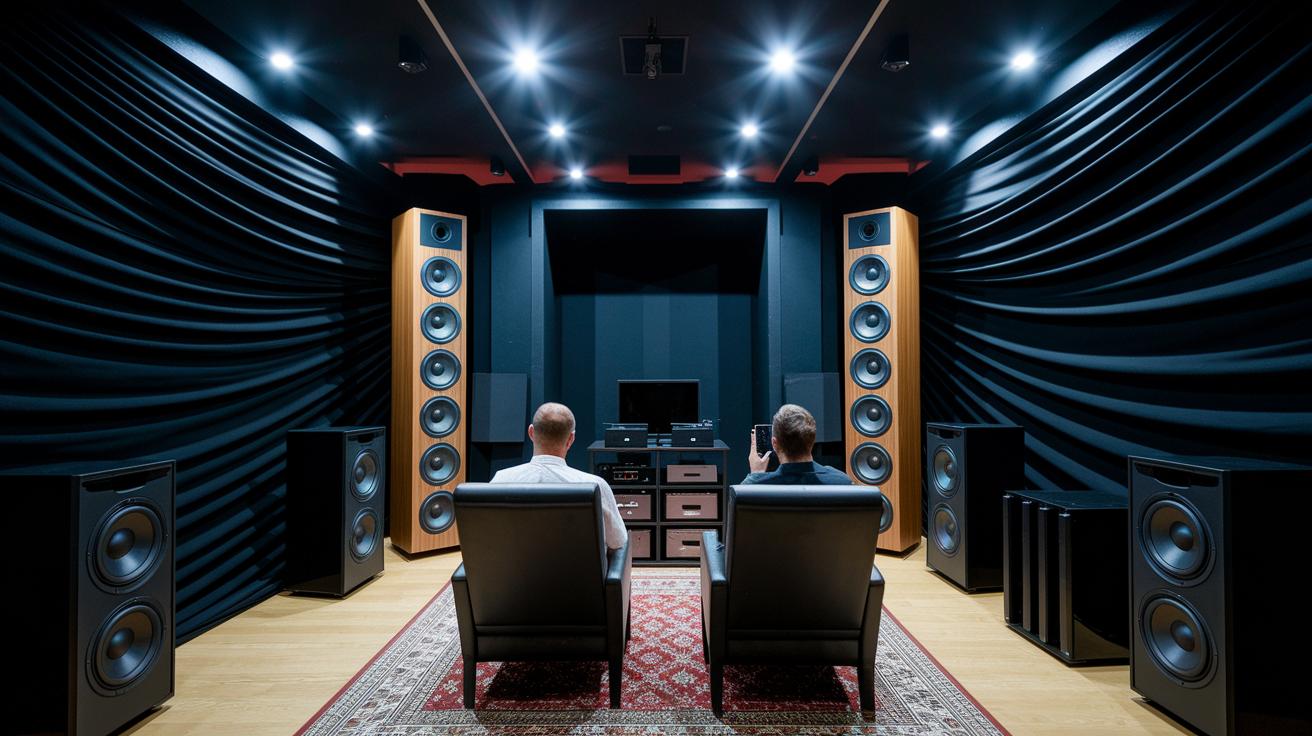
On April 6, 2020, we ran a blind listening test to check audio fidelity. We compared a Vizio SB46514-F6 Dolby Atmos soundbar with a full 5.1.4-channel surround setup. Everything was hidden under black fabric so listeners heard only the sound. Two veteran musicians, LeRena Major and Dan Gonda, lent their expertise to ensure every subtle detail was noticed.
The full surround system included ELAC Debut 2.0 speakers, extra A4.2 Atmos modules, a Rogersound Labs Speedwoofer 10S, and a Sony STR-ZA5000ES AV receiver. Meanwhile, the soundbar uses advanced Dolby Atmos processing and built-in drivers to simulate a multi-channel setup in one compact unit. The surround system offers clear separation among its speakers and dedicates each part to a specific frequency, while the soundbar manages to create a surprisingly immersive soundstage in a simple, space-saving design.
Our test found that audiophiles could easily spot the richer detail and broader dynamic range in the surround setup. At the same time, the soundbar delivered a performance that will satisfy most movie fans. If you want a tidy, efficient option with energetic sound, the soundbar is a smart choice. But if you crave precise, layered audio details, the full surround system is the better pick.
Setup and Space Requirements: Soundbar vs Home Theater System
Soundbars offer a simple plug‑and‑play solution that fits easily on your TV stand or mounts on the wall. With fewer cables to manage, they let you boost your TV sound with minimal fuss. In fact, a single soundbar can upgrade your home audio experience using fewer than a dozen cables.
On the other hand, home theater systems need more planning. You must carefully position several speakers, the front, rear, and center speakers, plus a subwoofer and an AV receiver. This setup means longer cable runs and extra space, along with the need to fine‑tune the system using calibration tools to achieve a balanced, immersive sound.
soundbar vs home theater system: Stellar Audio

Modern audio setups have never been easier. Whether you're leaning toward a soundbar or going all-in with a full home theater system, smart wireless features and built-in high-end technology make it simple to enjoy cinema-quality sound at home.
Wireless Connectivity and Streaming
Soundbars pack in wireless options like Bluetooth and Wi‑Fi, which let you pair multiple devices so you can stream music straight from your phone or tablet. Plus, handy apps let you adjust the sound on the fly without digging around for your remote. In contrast, home theater systems use an AV receiver to manage wireless connections, meaning each component needs its own setup. This method can handle robust streaming, think direct HDMI inputs for your game console or Blu‑ray player, but it usually takes more time to get everything running. Ultimately, your choice may come down to whether you prefer the plug-and-play ease of a soundbar or the customizable connectivity of a full AV setup.
Dolby Atmos and Spatial Audio
Many soundbars now include Dolby Atmos technology built right in to create an immersive surround sound experience without extra speakers. They feature upward-firing drivers that add a sense of height and depth, producing a rich soundstage in a compact design. On the flip side, home theater systems achieve Atmos by using separate ceiling or upward‑firing speakers. This setup offers more precise channel separation and customizable spatial effects. In short, while the dedicated Atmos modules in a home theater can satisfy audio purists, the all-in-one processing in soundbars is a great fit for movie fans looking for easy, high-quality performance in a smaller space.
Cost Analysis: Soundbar vs Home Theater System
When you look at the costs, a full home theater setup usually carries a heftier price tag. A complete home theater means multiple speakers, an AV receiver, and extras like Blu-ray or DVD players. That price can quickly climb compared to a premium Dolby Atmos soundbar, which many find hits a sweet spot between performance and cost.
Here are the key factors to consider:
| Factor | What to Consider |
|---|---|
| Channels & Speaker Count | More speakers mean higher costs |
| AV Receiver/Amplifier Features | Extra features can add up |
| Additional Atmos Modules or Ceiling Speakers | They boost the surround effect but increase expenses |
| Brand and Build Quality | Top brands and robust builds usually cost more |
| Cable and Installation | Professional setup can further raise the price |
For those on a budget or with limited space, a soundbar is a smart and cost-effective way to upgrade audio quality. On the other hand, a home theater system gives you the freedom to customize and add components over time. Many users start with a soundbar and gradually evolve to a full system, balancing premium sound with affordable, practical choices.
Pros and Cons: Evaluating Soundbar vs Home Theater System

Soundbars
- Pro: They have a small, compact design that makes them easy to plug in and use.
- Con: They don’t create a full surround sound experience with multiple channels.
- Pro: Minimal wiring keeps your setup neat and tidy.
- Con: You get fewer options to customize the sound to your taste.
- Pro: They deliver a balanced tone that works well for watching TV and casual music listening.
- Con: They usually lack deep, room-filling bass.
- Pro: They offer a cost-friendly solution for everyday sound needs.
- Con: They don’t separate audio channels as precisely as you might want for detailed sound cues.
- Pro: They’re quick to set up without needing extra adjustments.
- Con: They miss the depth required for a true cinema-like experience.
Home Theater Systems
- Pro: They provide an immersive, multi-channel sound that surrounds you completely.
- Con: Achieving the best sound often needs careful calibration.
- Pro: Dedicated speakers give clear separation for each audio channel.
- Con: The setup involves more complex wiring and installation steps.
- Pro: Separate subwoofers deliver deep, robust bass for a punchy performance.
- Con: They are generally more expensive in both equipment and setup costs.
- Pro: You can customize the speaker layout to best fit your room’s acoustics.
- Con: They require more space to set up properly.
- Pro: They can turn your home viewing into a movie theater experience.
- Con: Their setup and ongoing maintenance are more technically involved.
Decision Guide: Choosing a Soundbar or Home Theater System
If you're working with a small space or a limited budget, a Dolby Atmos soundbar can be a smart pick. It’s easy to set up, improves your sound compared to built-in TV speakers, and keeps your room uncluttered. One user mentioned they set it up in minutes and immediately heard the difference.
For those with a dedicated movie room, a traditional home theater system with multiple speakers delivers a richer, layered sound. One movie buff shared that tuning each speaker for the best effect is part of the fun. This kind of setup offers a clear separation of audio channels and deeper bass, perfect for immersive movie nights.
Another popular approach is to start with a soundbar and upgrade later if needed. This lets you enjoy better audio right away, with the option to add more speakers over time. It’s a practical way to test how much the upgrade improves your experience before committing to a full system.
Final Words
In the action, we explored how a soundbar improves TV audio with minimal space while a home theater system provides a fuller sound experience with more components. We discussed setup challenges, cost differences, and the clear-cut pros and cons of each option.
The guide offers practical insights into soundbar vs home theater system choices based on room size, budget, and desired audio depth. Whether you want simple plug‑and‑play ease or a rich, immersive experience, there’s a path that fits your needs. Enjoy your journey to a better listening setup.
FAQ
Q: What are the main differences between soundbars and home theater systems discussed on Reddit and other sources?
A: The main differences are that soundbars offer a simple, compact upgrade over TV speakers while home theater systems include multiple speakers for immersive surround sound, requiring more room and setup effort.
Q: How does a Dolby Atmos soundbar compare to a traditional home theater system?
A: A Dolby Atmos soundbar delivers spatial audio within one unit, while a home theater system uses separate Atmos modules, providing enhanced sound separation and a more cinematic audio experience.
Q: Is a 5.1 home theater system better than a soundbar for immersive digital sound?
A: A 5.1 system offers richer, dedicated channels for surround sound, though a quality soundbar can still deliver strong audio performance in smaller setups and for casual listening.
Q: What are the disadvantages of using a soundbar?
A: A soundbar may offer less precise channel separation, limited bass compared to dedicated subwoofers, and fewer connectivity options, which can affect overall audio performance in larger rooms.
Q: Do soundbars really make a difference compared to in-built TV speakers?
A: Soundbars significantly improve audio clarity and depth over built-in TV speakers, resulting in clearer dialogue and richer music, with easy setup and minimal space requirements.
Q: How do products like LG SN5Y 2.1, LG SN4 2.1, Sonos Beam, and Sony HT-S40R compare in performance?
A: These models vary in design and features; LG options focus on affordable clear sound and bass, Sonos Beam emphasizes smart connectivity, and Sony HT-S40R aims for a fuller home theater-style experience.
Q: Which is better for home music listening—a soundbar or a home theater system?
A: For music, a home theater system can offer a wider sound stage and deeper bass, while a high-quality soundbar may suffice in small spaces with streamlined setup and neat appearance.
Q: What should I consider when choosing between a soundbar and a receiver-based system?
A: Key factors include ease of installation, available space, desired audio depth, and budget; soundbars provide simplicity, while receiver-based systems offer more customization and better scalability.