
Do expensive cables really change headphone sound? The bottom line is they usually don't. Many people believe that high-priced accessories, long burn-in times, and special designs unlock secret sound quality. But our tests say otherwise.
Our blind studies and clear numbers show that what we expect to hear can easily override what our ears catch. In simple terms, the gear itself matters more than any fancy extras. In this post, we break down these common myths and explain why real listening, without all the hype, is the way to go.
Clearing Common Audiophile Headphone Myths in One Place
We dug into these common myths using real tests and clear numbers. Our results show that many well-known claims, like pricey cables making a difference or burn-in actually improving performance, are more about what we expect to hear than what we actually do. In our blind studies, we found no audible difference between stock wires and expensive cable upgrades. And the so-called benefits of burn-in? They seem to come from our ears getting used to the sound and from wear on the ear pads, not from any magic improvement.
Here are some myths we took apart:
| Myth | Reality |
|---|---|
| Cables improve sound quality | No measurable difference |
| Burn-in enhances performance | Improvement is likely due to listener adaptation |
| Wider frequency range equals better audio | Numbers don’t always translate to real listening improvements |
| Higher price always means superior sound | Price alone isn’t a reliable sign of quality |
| Open-back design delivers true soundstage realism | The design benefits can be overstated in tests |
These ideas stick around because of long-established marketing stories and personal experiences shared in audiophile groups. Even small changes or placebo effects can seem like a big deal over time. Technical terms like "frequency range" can make things sound more impressive than they actually are. Our bottom line is that both analog and digital setups reach the limits of what our ears can hear, and only careful testing shows what really works.
Audiophile Headphone Cable Quality Myths
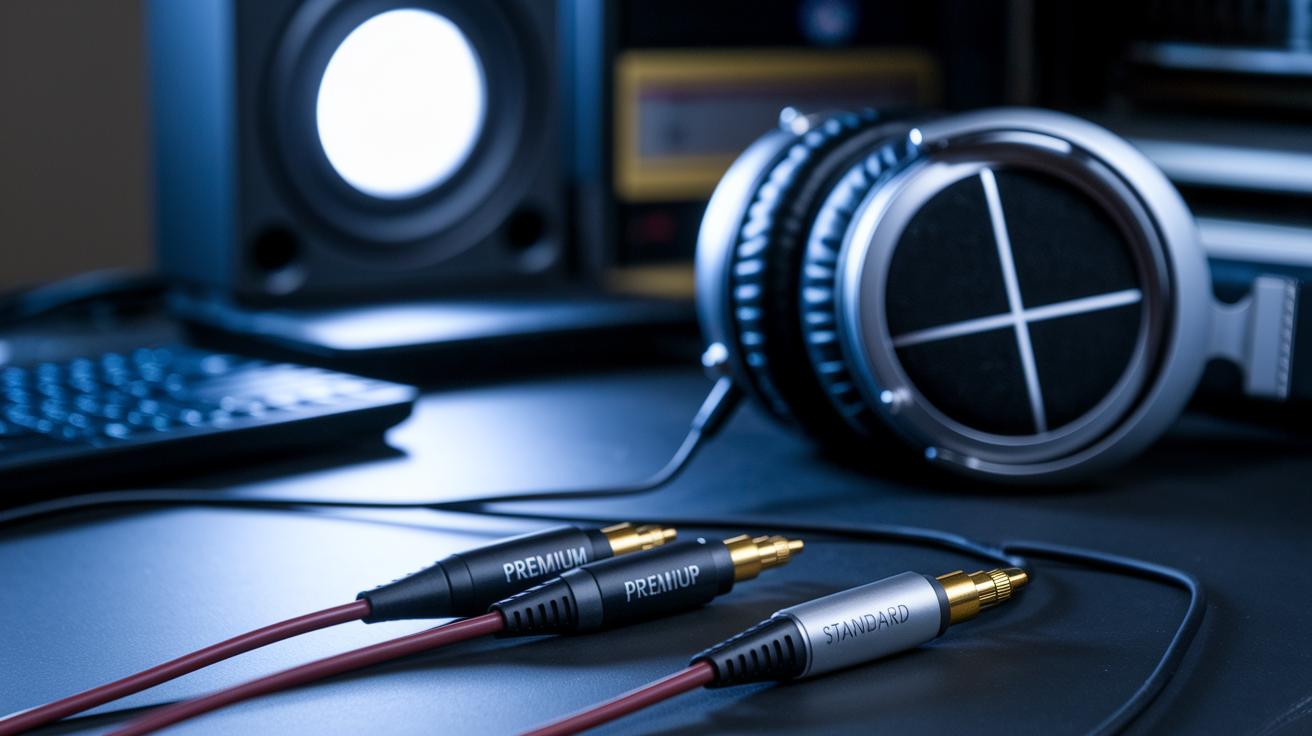
Premium cables are often touted as a surefire way to boost sound quality, with claims that they improve conductivity, reduce signal loss, and reveal hidden musical details that justify their higher cost. However, controlled blind ABX tests, and even simple coat-hanger cable swaps, consistently show that the audio differences between regular cables and their expensive counterparts are barely noticeable. In these blind tests, listeners don’t know when a cable change has occurred, so any "improvements" they report are more about expectation than actual sound changes. One test, for instance, repeatedly found that the audio performance stayed the same no matter which cable was used.
Experts agree that the supposed benefits of high-end cables come down to a psychological effect. One specialist pointed out that what listeners perceive as a sound upgrade is really just a placebo. The underlying sound quality remains consistent regardless of the cable’s price, proving that the differences are more in our heads than in the hardware.
Audiophile Headphone Source Gear & Burn-In Myths
When you upgrade a DAC/amp, it's easy to expect a huge leap in sound quality. However, our hands-on tests show that swapping to another unit with a similar tuning rarely makes an audible difference. For example, the Tanchjim Luna, known for its neutral sound, proves that even well-matched source gear tends to deliver consistent performance. In most cases, any minimal improvements seem more about marketing buzz than real audio gains.
Studies on headphone burn-in reveal that any perceived changes aren’t caused by alterations in the device's acoustics. Instead, what many call the "burn-in effect" is really your brain getting used to the sound and the natural wear of the ear pads over time. Blind tests consistently show that simply using the device for longer does not magically adjust its frequency balance or clarity. The original sound reproduction holds steady right from the start.
Technical measurements support these observations. Data indicates that both frequency response and distortion levels remain almost unchanged. One test found variations of less than 0.5 dB in the key mid frequencies, far too small for the average listener to notice. This evidence confirms that upgrading a DAC/amp or the idea of headphone burn-in are more about perception than any measurable sonic improvement.
Audiophile Headphone Specification Myths: Frequency & Format

When you look at many spec sheets, you'll see frequency ranges like 5 Hz to 50 kHz. But our ears normally pick up sounds from about 20 Hz to 20 kHz, which means these numbers are more about brand storytelling than real listening benefits. In our tests, extending the range beyond what we can hear doesn't improve the sound you experience.
High-resolution audio formats and claims of bit-perfect sound also grab attention. Yet blind listening tests show that lossy codecs from services like Spotify and Apple sound almost identical to lossless files. The small technical differences rarely change what you actually hear.
Everyday listening data confirms these results. Listeners tell us that factors like driver tuning and overall design matter much more than impressive headline specifications. In real use, those high numbers on paper don't translate to a noticeable difference. True audio enjoyment comes from careful engineering, not inflated frequency ranges or digital format promises.
Audiophile Headphone Price Versus Performance Myths
A lot of folks in the audio community think that a steep price always means a better sound. When you're shopping for top-tier headphones, many assume that spending more automatically brings improved quality. It’s common to believe that a $1,000 pair must be better because it supposedly uses higher-grade materials and advanced tuning. But here's a thought: moving from a budget model to a high-end one can feel like stepping into a new world, even if the real differences are sometimes overstated. This view overlooks how much the overall design and engineering truly matter.
In our tests, we found that performance isn’t always linked to cost. For instance, some in-ear monitors under $50 even outshined certain $1,000 over-ear models in clarity and dynamic range. These affordable options delivered bass response and detail that rivaled their pricier peers. In everyday use, you might be surprised to hear that budget-friendly headphones can create an engaging sound stage just as well as their expensive counterparts. This challenges the idea that spending more guarantees better sound.
Blind listening sessions back this up too. In controlled tests, listeners often couldn’t tell much difference between costly and affordable options. These findings show that what really counts is thoughtful engineering, not just a high price tag.
Audiophile Headphone Sound Signature & EQ Myths
Equalizers, when applied carefully, can actually polish your listening experience. They let you fine-tune specific frequency bands so you can smooth out harsh sounds and bring forward subtle details while keeping the original recording's vibe intact. Many modern devices, like the FiiO BTR17 and Tanchjim Stargate II, come with multi-band parametric EQ, giving you the freedom to shape the sound to match your unique listening habits.
Some headphone enthusiasts worry that using an EQ might strip away the natural character of their gear. In reality, a well-tuned EQ can iron out distortions and boost clarity, resulting in a sound that's both balanced and engaging. You can easily tame overly bright highs or muddy bass to better suit your environment and style.
Take, for example, models like the FatFreq × HBB Deuce and Binary Audio DynaQuattro. They intentionally add extra bass punch and warmth without losing crisp detail, showing that a deliberately colored sound signature can enhance your listening experience while still delivering quality audio.
Audiophile Headphone Driver & Acoustic Design Myths
Many headphone fans think the driver type defines the overall sound. They often say balanced armature drivers bring out finer details with a special tone, while dynamic drivers are praised for delivering powerful bass on a budget. However, real-world tests suggest these differences are quite subtle. Balanced armature drivers might add a unique touch, but the clarity and balance don’t differ much from dynamic options.
Controlled blind tests show that the differences between these driver types are not as dramatic as some claim. Both offer distinct benefits that suit various tastes, yet when it comes to everyday listening, the variations in distortion, bass impact, and tonal detail are minor. In the end, a well-designed headphone performs based on its overall engineering rather than solely on the type of driver it uses.
| Driver Type | Claimed Advantage | Measured Difference |
|---|---|---|
| BA | Higher third-order harmonics and distinct timbre | Subtle tonal variation with minimal clarity impact |
| DD | Stronger bass output at low cost | Comparable distortion and overall performance |
Audiophile Headphone Soundstage & Isolation Myths
Some say open-back headphones instantly create a wide, immersive sound stage with expansive imaging. However, our tests show that the real magic lies in driver tuning and your listening environment. Even the best open-back models need the right room acoustics to deliver a natural sound, so design alone isn’t the whole story.
Manufacturers love to tout active noise cancellation (ANC) as the answer to complete isolation. In our experience, though, passive isolation, the natural noise reduction from a snug, well-fitted design, often holds its own in the mid-range frequencies. Sometimes, ANC even introduces unwanted sounds that a simple passive design avoids, leaving many to question its everyday value.
Everyday users agree that both open-back and closed-back headphones have their ups and downs. Sound clarity and isolation will vary greatly depending on your room setup and how the headphones fit your ears. In controlled tests, most listeners noted that neither design provided the dramatic improvements that marketing promises, proving that real-world performance can defy expectations.
Reevaluating Audiophile Headphone Listening Fatigue & Subjectivity
Many people think headphone fatigue means the headphones are faulty. In reality, harsh high notes or listening at very high volumes over time often cause it. In our tests, extended sessions at high sound levels led to fatigue even when the headphones reproduced the recording accurately. One listener said, "After a few hours at high sound levels, even a neutral sound can start to bite."
Our ears are all different. What one person hears as crisp and lively, another may experience as too bright or harsh. Measurements show that our individual sensitivity plays a big role in how we perceive sound. In other words, a mix that sounds clear and vibrant for one listener might be fatiguing for someone else.
The trick is to choose headphones that match your unique hearing profile. Pairing the right headphones with your personal hearing traits can help prevent fatigue. Even if the tuning stays the same, your personal listening style filters the sound, making it crucial to pick the right match for you.
Final Words
In the action, we tackled myths from cable quality to burn-in effects and design claims. Hands-on testing and real-world data broke down common misconceptions about frequency ranges, price versus performance, and soundstage realism.
Our review shows that many assumptions don't hold up under scrutiny. Staying informed on audiophile headphone myths debunked empowers you to make smarter decisions. Enjoy your search for truly great sound.
FAQ
What does “Audiophile headphone myths debunked YouTube” cover?
The reference addresses common claims like cable superiority, burn-in improvements, and price advantages by using controlled tests and real data to challenge marketing claims and listener biases.
What insights do discussions on audiophile CD players offer?
Discussions on audiophile CD players examine how sound quality nuances and actual performance tests show that higher costs don’t always translate into superior playback or measurable improvements.
What do lists like the “Top 10 best vintage speakers of all time” highlight?
Such lists spotlight vintage speakers known for their lasting performance, emphasizing soundstage, build quality, and a unique character that combines timeless design with reliable, robust audio output.
Are audiophile headphones really worth it?
Evaluations reveal that while audiophile headphones offer refined tuning and design, their value depends on personal listening preferences as improvements over budget models are sometimes marginal based on controlled tests.
Why do some audiophiles dislike Beats?
Some audiophiles criticize Beats for favoring style and marketing over accurate sound reproduction, viewing their signature tuning as less focused on the neutral, data-backed performance expected in high-fidelity audio.
Which audio brands are most trusted by audiophiles?
Trusted brands deliver consistent, well-measured performance and neutral sound signatures. They earn respect by emphasizing tested, transparent specifications and delivering reliable audio quality for discerning listeners.
Does loving stereo equipment make someone an audiophile?
Enjoying stereo equipment is a strong sign of interest in sound quality. However, being an audiophile goes beyond casual listening to include a commitment to seeking out accurate, high-fidelity audio performance.
omeprazole mag dr
omeprazole mag dr
topiramate 25mg weight loss reviews
topiramate 25mg weight loss reviews
vardenafil (levitra) amazon
vardenafil (levitra) amazon
ketoconazole shampoo basics
ketoconazole shampoo basics
toradol migraine overview
toradol migraine overview
ivermectin scabies mechanism of action
ivermectin scabies mechanism of action
minoxidil regrowth metrics
minoxidil regrowth metrics
sildenafil online protection
sildenafil online protection
vardenafil 10 mg option
vardenafil 10 mg option
vardenafil 20 mg info
vardenafil 20 mg info
how fast vardenafil works
how fast vardenafil works
Duration Variability Library
Duration Variability Library