
Are you torn between the hands-on charm of a classic mechanical watch and the smart features of a modern hybrid? Many watch fans feel the same. We looked at both styles: mechanical watches, with their hand-tuned gears and elegant design, bring a timeless appeal that’s hard to beat, while hybrid watches step things up with added perks like activity tracking and sharper accuracy. Ultimately, your choice comes down to whether you value traditional artistry or modern convenience for your day-to-day wear.
Head-to-Head Overview: Hybrid vs Mechanical Watch Comparison
Hybrid watches mix the accuracy of quartz with the charm of mechanical design, keeping time with an error margin of about ±15 seconds per month. By comparison, traditional mechanical watches can stray between –20 and +40 seconds per day, which means hybrids offer notably better precision for daily wear.
Mechanical watches run solely on a network of tiny gears and mainsprings. Many enthusiasts love them for their handcrafted feel and classic movement, even if they do need regular upkeep to keep ticking smoothly. They carry a sense of history and personal artistry that appeals to those who value tradition and luxury.
Hybrids, meanwhile, add a modern twist. They use battery power to supplement their mechanical energy, often working with a quartz regulator. Plus, they can incorporate digital features like activity tracking or multiple time displays, all while maintaining that analog look. This blend of old and new results in a watch that's practical for everyday use and usually more affordable than high-end automatics.
In the end, it really depends on what matters most to you. If you prize accuracy and extra features without giving up a classic style, a hybrid is a smart pick. But if you’re drawn to the artisanal craftsmanship and timeless appeal of a purely mechanical movement, you might lean that way instead.
- Hybrid benefits: accurate timing, extra features, modern design.
- Mechanical benefits: artisanal craft, storied heritage, timeless feel.
Movement Mechanics of Hybrid and Mechanical Watches
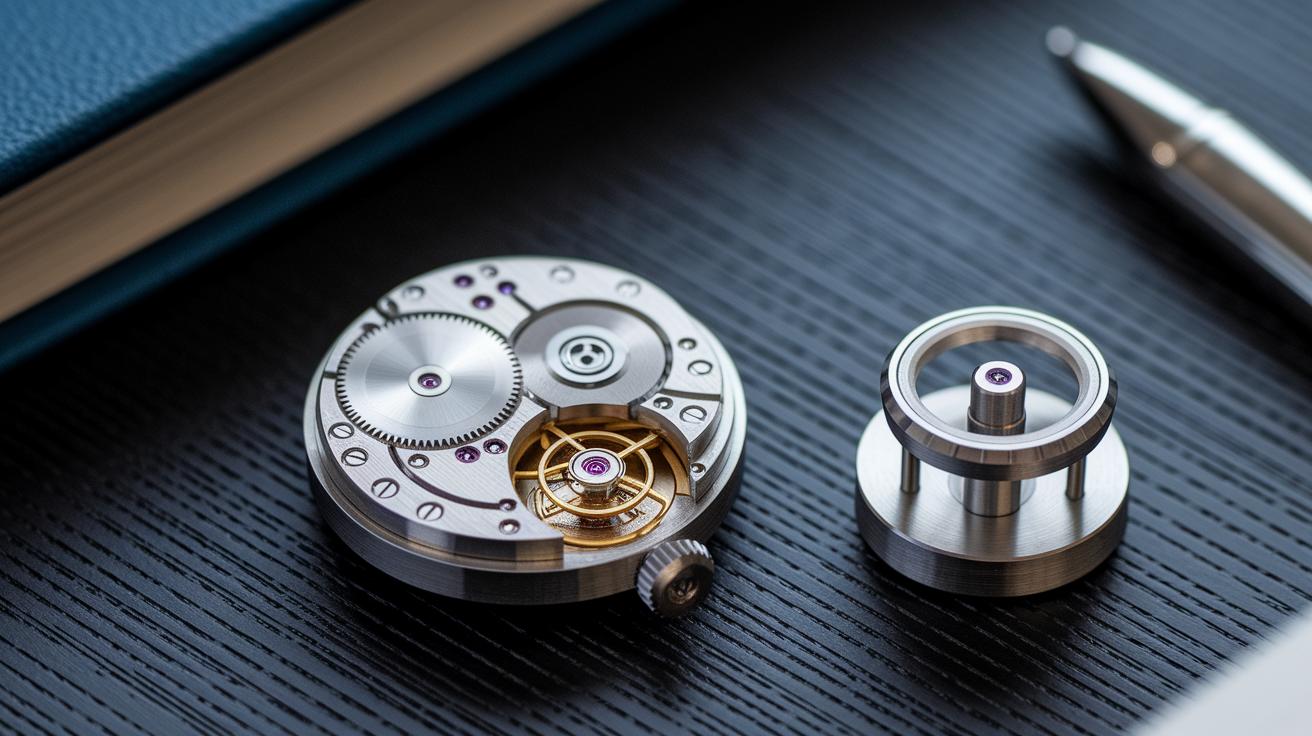
When you look at watch movement mechanics, you can easily spot the difference between a classic mechanical design and a modern hybrid system. Mechanical watches use a set of gears and a balance wheel to keep time. While many appreciate their traditional charm, these watches can lose or gain anywhere from 20 to 40 seconds in one day. In contrast, quartz watches depend on a tiny, battery-powered crystal oscillator and are much more precise, drifting only about 15 seconds in a month.
Hybrid watches mix these two approaches. They use mechanical energy to power a quartz regulator. This means you get the familiar feel of traditional watchmaking, along with the accuracy of modern electronics. Some hybrid models even add extra features like step tracking and sleep monitoring, all while showing time with a classic analog look.
A standout example is the Grand Seiko Spring Drive. Launched in 1998 after 20 years of development and more than 600 prototypes, it combines mechanical force with quartz speed control. Recent models include the Piaget Emperador Coussin XL 700P from 2016, which features a high-torque mechanical module paired with a hybrid quartz circuit, and the Frederique Constant Hybrid Manufacture from 2018, which joins its in-house FC-750 mechanical movement with a digital module for health monitoring.
These advances show that hybrid watches deliver both precise timekeeping and useful modern functions. They give you a way to enjoy the craftsmanship of classic mechanics without giving up everyday features.
| Year | Brand & Model | Movement Innovation |
|---|---|---|
| 1998 | Grand Seiko Spring Drive | Mechanical power with quartz-level speed control |
| 2016 | Piaget Emperador Coussin XL 700P | High-torque mechanical module with hybrid quartz circuit |
| 2018 | Frederique Constant Hybrid Manufacture | FC-750 mechanical movement paired with digital MMT module for health tracking |
Hybrid Watch vs Mechanical Watch: Stellar Style
If you love timeless design, mechanical watches have a special charm. They show off their inner workings with clear gear trains, skeleton dials, and polished bridges that highlight traditional craft. Their slightly uneven tick adds a personal touch that many enthusiasts cherish.
Hybrid watches, however, bring a modern twist to a classic look. They keep the familiar analog hands and markers but mix in a subtle digital display for smart functions like activity tracking. Often built with rugged materials such as titanium or ceramic, many include water-resistant seals for everyday use. This blend gives you a stylish watch that’s both elegant and practical.
| Feature | Description |
|---|---|
| Caseback | Skeleton or exhibition style |
| Dial | Complex finishing and design details |
| Sub-dial | Integrated digital display placement |
| Case Material | Choice of robust materials and water-resistance |
| Strap Options | Variety in straps and bracelets |
| Engraving | High-quality finishing details |
Battery Life, Maintenance, and Cost Comparison of Hybrid and Mechanical Watches
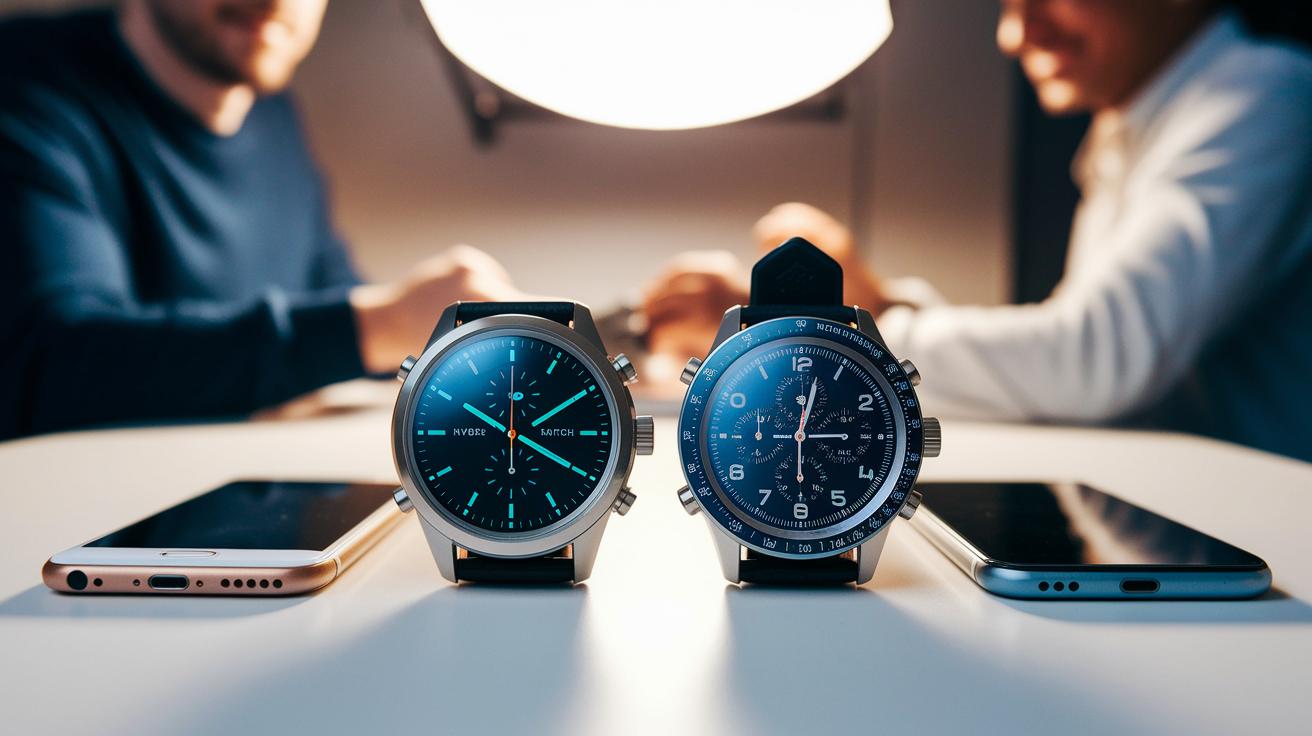
Hybrid watches use a battery to power both the clock and extra digital features. In our tests, the battery lasts anywhere from 2 to 5 years based on how often you use its functions. Replacing the battery usually costs between $50 and $100. The process is designed to be simple enough to do yourself or through an authorized service center. Some models even require the digital part to get a firmware update via a smartphone app, though these updates are generally free or come at a very low cost.
Mechanical watches, on the other hand, don’t have batteries at all. They derive energy from a wound mainspring, which is powered by your movement or an automatic rotor. However, their all-mechanical design means they need servicing every 3 to 5 years. This service includes a complete overhaul like cleaning, lubrication, and gear adjustments, which can run between $200 and $500 depending on the watch’s complexity. Regular maintenance is key to keeping these watches precise as wear and tear can affect their performance over time.
When you look at the upkeep, the costs can vary quite a bit. Many hybrid watch users appreciate the convenience of a simple battery swap, compared to the more involved mechanical service. Plus, the occasional firmware update on a hybrid watch barely adds to the overall cost when you compare it to a full mechanical overhaul.
Key cost elements include:
- Hybrid battery swap frequency and cost
- Mechanical full service scope and pricing
- Digital module updates and associated fees
Both watch types need regular maintenance. Hybrids offer the benefit of lower-cost, less frequent service, while mechanical watches require a more comprehensive tune-up to keep them running smoothly over the years.
Durability and Performance Testing for Hybrid vs Mechanical Watches
Both hybrid and mechanical watches are put through real-life tests to see how they handle everyday wear and tear. Using the ISO 22810 water-resistance test, many of these watches are rated for 50 to 200 meters. This means a quick rinse, splashes in the rain, or washing your hands is no trouble at all. Just be careful with heavy water exposure.
When it comes to impacts, the tests show clear differences. Mechanical watches have more delicate inner workings. Shocks above 5,000 g can interfere with their timekeeping. In contrast, many hybrid watches benefit from strong, solid-state electronics that can take up to 10,000 g. This extra shock resistance makes hybrids a smart choice if you lead an active lifestyle or might drop your watch sometimes.
Temperature swings also set these two types apart. In extreme conditions, hybrids stay accurate within about ±0.5 seconds per day. Mechanical watches, however, can lose or gain anywhere from 20 to 40 seconds a day because the gears can expand and contract with the heat and cold.
There’s also the matter of long-term use. A well-maintained mechanical watch can last for decades and even gain some unique character over time. On the other hand, hybrids might need their electronic parts or battery replaced after about 8 to 10 years.
Key performance benchmarks include:
- ISO 22810 water-resistance ratings: 50-200 meters
- Shock resistance: 5,000 g for mechanical watches and 10,000 g for hybrids
- Temperature performance: Hybrids accurate at ±0.5 seconds per day versus mechanical watches varying from -20 to +40 seconds per day
These tests give a clear picture of how each type of watch stands up to daily challenges and extreme conditions, helping you decide which one fits your lifestyle best.
Hybrid Watch vs Mechanical Watch: Stellar Style

Hybrid watches combine modern smart features with a timeless look. They offer activity tracking, smartphone notifications, a 24-hour display, dual time zones, and built-in fitness metrics. This mix works great for those with active lifestyles or busy schedules, letting you monitor your health and plan your day at a glance. However, they do depend on batteries and electronic components, which means you might need to replace them or update the software occasionally.
Mechanical watches, on the other hand, are all about tradition and fine craftsmanship. They showcase detailed features such as tourbillon, minute repeater, and GMT functions, often with a see-through caseback that reveals the inner workings. This makes them perfect for collectors and those who appreciate a classic, hands-on timepiece. The trade-off is that they require regular, sometimes expensive, maintenance, and their timekeeping can drift a bit with everyday use.
Final Words
In the action, we compared every detail from the watch movements to design cues and maintenance needs. We saw how both options balance tradition with modern tech, highlighting the differences in upkeep and everyday use. You learned the ins and outs of a hybrid watch vs mechanical watch, from precise accuracy to enduring craftsmanship. Our review shows there’s a match for every taste and lifestyle, leaving you with clear insights for a confident choice. Enjoy the journey toward your perfect timepiece.
FAQ
What does a hybrid watch mean?
A hybrid watch means a timepiece that combines mechanical energy with quartz regulation, offering the classic look of analog hands along with digital functions for enhanced accuracy and added smart features.
How does a hybrid watch compare to a mechanical or automatic watch?
A hybrid watch merges mechanical energy with quartz precision, delivering smart features and improved accuracy. In contrast, mechanical and automatic watches rely solely on gears and mainsprings, with automatic ones winding themselves through movement.
What are the pros and cons of hybrid watches versus mechanical watches?
Hybrid watches bring digital functions, accurate timekeeping, and activity tracking, while mechanical watches provide timeless craftsmanship and a traditional tick. Hybrids need occasional battery replacement, whereas mechanicals require periodic servicing.
What is an automatic watch?
An automatic watch uses a self-winding mechanical movement that harnesses the wearer’s motion to keep running, eliminating the need for manual winding or a battery.
What is Seiko hybrid movement?
Seiko hybrid movement integrates mechanical power with quartz regulation to boost precision while retaining classic watchmaking attributes, merging the benefits of both mechanical and digital technologies.
Are Rolex automatic or mechanical?
Rolex watches are automatic, meaning they feature a self-winding mechanical movement built on traditional craftsmanship that runs smoothly without needing a battery.
Which watch type is better for daily use?
The ideal watch for daily use depends on your priorities; hybrids offer smart features and precise timekeeping for active lifestyles, while mechanical watches provide a classic style and artisanal charm.
What are the three types of watches?
The three main types of watches are quartz, mechanical, and hybrid. Quartz watches rely on battery-powered oscillation, mechanical watches depend on gears and springs, and hybrids merge both systems for dual functionality.
What is the Fossil Hybrid watch?
The Fossil Hybrid watch blends an analog design with digital tracking features, offering activity monitoring and notifications alongside a classic look, making it a versatile option for everyday wear.
What are hybrid quartz countertops?
Hybrid quartz countertops are engineered surfaces that mix natural quartz with resins, creating durable, low-maintenance kitchen or bathroom surfaces with a refined, modern appearance.