
Ever wondered if a tiny accessory could really exceed your expectations? Consumer Reports put several smart rings to the test in everyday situations and found that many of them perform better than most people expect. They looked at factors like weight, battery life, and tracking accuracy to show the trade-offs that suit different lifestyles. In this review, we cut through the buzz to explain how smart rings can deliver solid performance in unexpected ways. Keep reading to find out which ring fits best for your daily needs and which compromises you might be ready to accept.
Consumer Reports’ Smart Ring Performance Overview
Consumer Reports ran tests on several smart rings and found that many of them work better than you might expect but come with a few trade-offs. These differences can help you pick the ring that fits your needs. For instance, the Oura Ring 4 is very light at 3 to 4 grams. It scores high on tracking sleep, activity, and stress and has a battery that lasts about 8 days. Its readings stay accurate even if the ring shifts on your finger. However, you do need a $5.99 per month subscription, and it may sometimes miscount your steps.
The RingConn Gen 2 Air is even lighter at 2 to 3 grams and wins praise for its excellent battery life of around 10.5 days. It tracks detailed health metrics like light, deep, and REM sleep stages, skin temperature, and breathing rate without any monthly fees. Plus, it works well with both Android and iOS devices.
On the other hand, the Samsung Galaxy Ring is designed just for Samsung users and only works with Android. It offers a sleek fit, tracks sleep and activity reliably, and lasts about 6.5 days. This ring can be a solid choice if you already use Samsung devices.
Other models offer their own benefits. The Amazfit Helio Ring is made with scratch-resistant titanium and is rated for 10 ATM water exposure. It comes at a price of $199 and has no extra fees. The Circular Ring Slim was updated in June 2024 with improved water and scratch resistance, making it one of the thinnest rings available, although it comes in only two sizes. The Movano Evie is focused on women’s health with its specialized sensors, while the Prevention Circul+ even includes an FDA-approved ECG and more advanced tracking features.
Consumer Reports found that rings without subscription fees, such as the RingConn Gen 2 Air, can sometimes offer better everyday battery life than some of the pricier options.
Detailed Smart Ring Model Comparisons in Consumer Reports Tests
We put together a handy guide that sums up the key specs of each smart ring and explains the trade-offs you might face. This guide shows you what you get, like sensor details and water resistance, along with any extra costs. For example, even the lightest ring might cost extra for premium tracking, so you decide if you want a lower upfront price or better long-term features.
| Model | Weight (g) | Price/Subscription | Water Resistance | Unique Sensors | Trade-offs |
|---|---|---|---|---|---|
| Oura Ring 4 | 3–4 | $299+ / $5.99/mo | Standard | Optical sensors for activity, sleep & stress | Detailed sleep data comes with a recurring fee |
| RingConn Gen 2 Air | 2–3 | No fees | IP68 | Sleep stages, SpO₂, skin temp, respiratory rate | Great mix of features without monthly charges |
| Samsung Galaxy Ring | ~3.5 | None / No fees | IP68 | Heart rate and movement tracking | Reliable connectivity with basic sensors |
| Amazfit Helio | 3.75–4 | $199 / No fees | 10 ATM | Durability-focused design | Strong water resistance but fewer sensors |
| Circular Ring Slim | ~2.5–3 | $275 | Enhanced water seal | Ultra-thin design with better scratch resistance | Sleek look with moderate waterproofing |
| Movano Evie | 3.2–3.7 | Mid-range pricing | Standard | Women’s health tracking sensors | Specialized health data but may miss extra features |
| Prevention Circul+ | 4.9 | ~$300 | Standard | FDA-cleared ECG; enhanced blood-oxygen | Advanced health readings at a heavier design |
This summary gives you clear insights into each model's strengths and drawbacks so you can find the ring that best matches your needs.
Smart Ring Sensor Accuracy and Health Tracking Insights
Consumer Reports found that smart ring sensors give readings you can really count on for better health insights. Take the Oura Ring 4, for example. It uses optical sensors that stay accurate even when the ring moves, so your sleep stages, activity levels, and stress measurements remain reliable all day.
The RingConn Gen 2 Air pushes accuracy further. It tracks different sleep stages, light, deep, and REM, while also monitoring blood oxygen (SpO₂), skin temperature, and breathing rate with high precision. In a one-week test, its sleep data matched clinical-grade measurements, impressing even the most detail-oriented reviewers.
Other models bring something extra to the table. The Ultrahuman Ring Air teams up with an M1 module to offer continuous glucose monitoring along with heart-rate tracking, providing a fuller view of your health. Meanwhile, the Prevention Circul+ features an FDA-cleared ECG sensor that gives accurate blood-oxygen readings for all skin tones and detailed REM and heart rate variability insights.
The Samsung Galaxy Ring uses PPG sensors to keep an eye on heart rate and movement. While it doesn’t dive as deep into stress tracking as some premium options, it still delivers solid data, making it a good choice if you’re looking for a more budget-friendly option.
Battery Longevity Review for Smart Rings by Consumer Reports
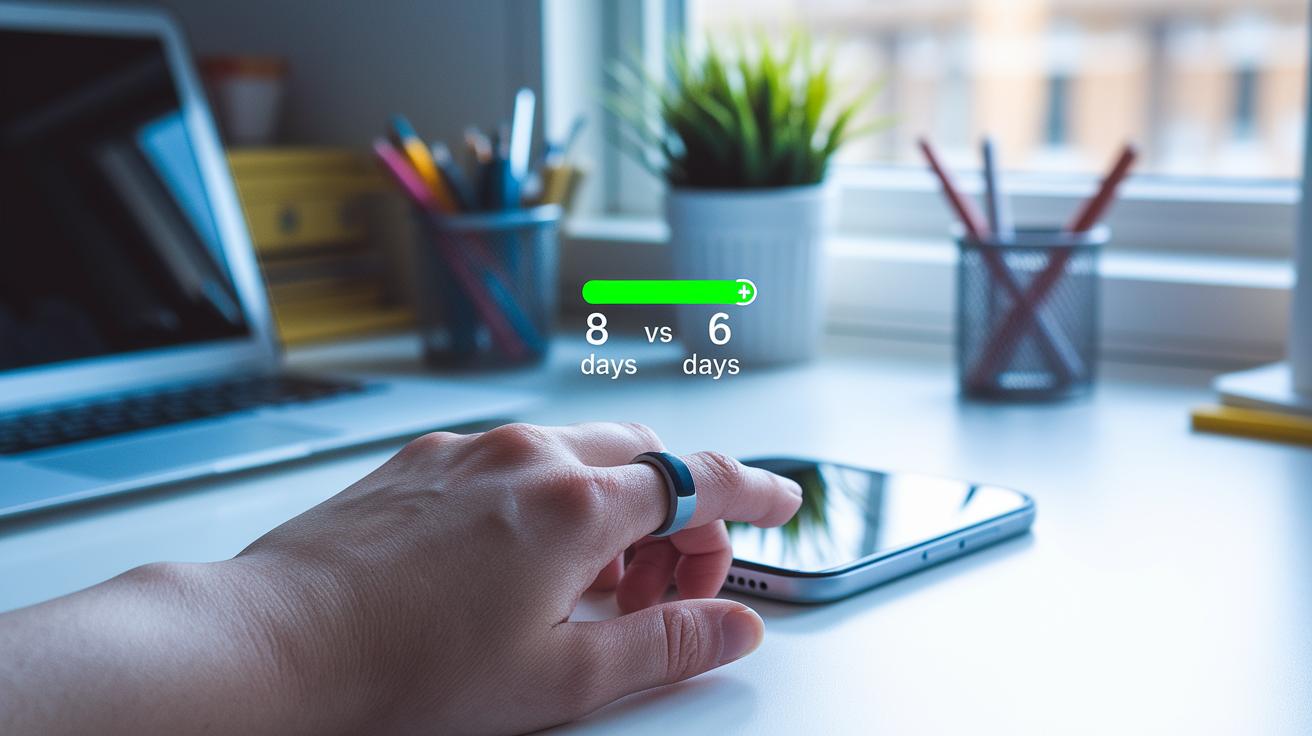
Consumer Reports ran tests on smart rings and confirmed their typical battery lives. They also found that using certain features or firmware settings can slightly change how long the battery lasts. For example, the Oura Ring 4 usually keeps going for about 8 days. However, if you switch on its stress-tracking feature, you might only get 6 or 7 days of use. These conclusions come from tests that tracked the rings over several weeks with different features turned on.
The RingConn Gen 2 Air impressively lasts around 10.5 days on a single charge. Even when used heavily during multi‑week sessions, its firmware smartly reduces energy drain to keep performance steady.
The Samsung Galaxy Ring in its largest size runs for about 6.5 days. Using the snore-tracking feature cuts the battery life by roughly half a day. Regular firmware updates help keep its performance consistent during daily use.
| Smart Ring | Typical Battery Life | Feature Impact |
|---|---|---|
| Oura Ring 4 | 8 days | Stress-tracking reduces life to 6–7 days |
| RingConn Gen 2 Air | 10.5 days | Stable performance under multi‑week tests |
| Samsung Galaxy Ring | 6.5 days | Snore-tracking reduces runtime by 0.5 days |
Consumer Reports Smart Ring Exceeds Expectations
A recent Consumer Reports study found that many smart rings work really well for everyday wear. The Oura Ring 4 and Circular Ring Slim stand out with their lightweight 3–4 g design and subtle style that’s perfect for all-day or even sleeping use. They sit comfortably on your finger without drawing attention, making them a great choice whether you're at work or relaxing at night.
The RingConn Gen 2 Air and Galaxy Ring come with curved, thin bands that barely interrupt your daily tasks. Their smart, ergonomic design means you might even forget you’re wearing them. One tester said, "It feels like wearing nothing at all during routine activities," which shows just how well they blend comfort with functionality.
On the other hand, the Movano Evie is built with sensors focused on women's health and has a wider shape. It offers useful insights, but some users felt that its bulkier size might be a bit too noticeable if you’re after a very discreet accessory.
To help with the perfect fit, companies have started including plastic sizing kits. This way, smart rings aren’t just about cool tech features, they’re also designed to be comfortable and well-fitted for everyday life.
- Tested on different daily activities
- Focus on exact sizing and comfy design
These findings show that smart rings really do go beyond expectations when it comes to comfort and design.
Durability and Water Resistance Evaluations of Smart Rings
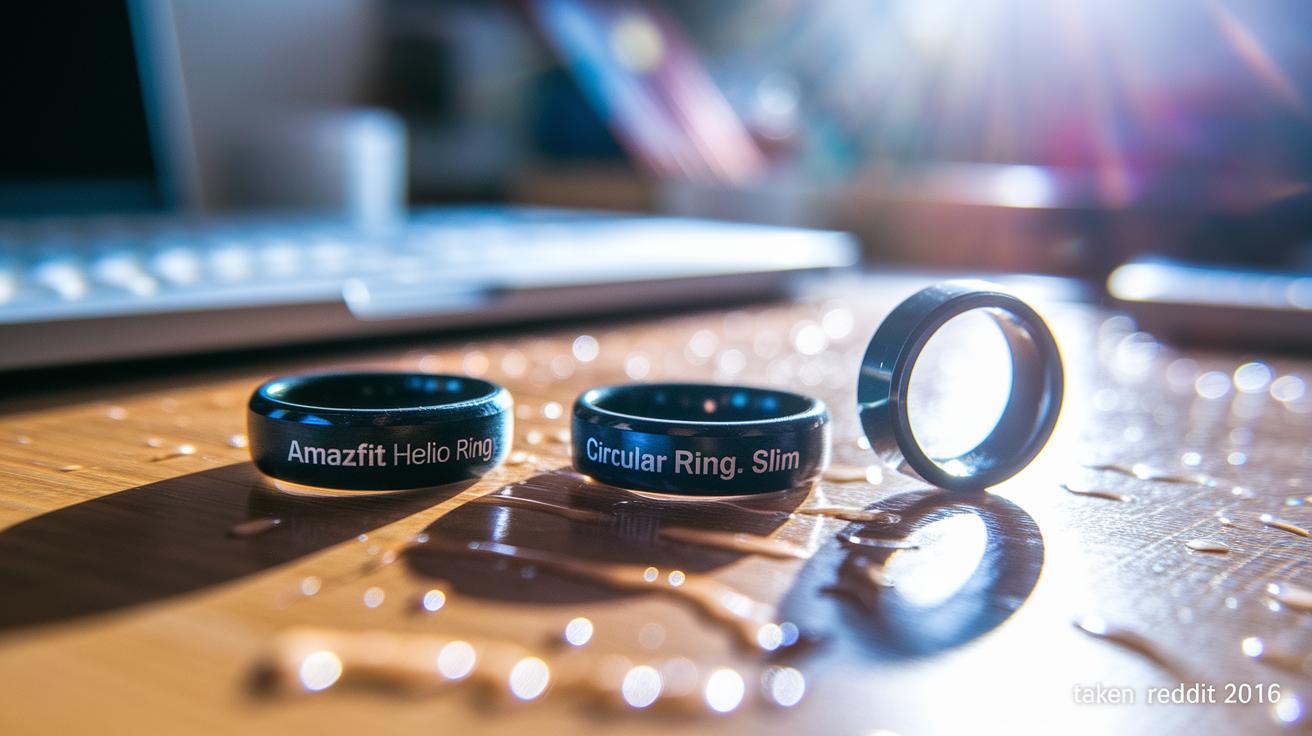
Consumer Reports put these smart rings through real-world tests to see how they handle scratches, bumps, and water exposure. The Amazfit Helio Ring stands out with its titanium alloy build and scratch-resistant coating. It earned a strong 10 ATM water rating and even sailed through saltwater and impact tests.
The Circular Ring Slim got a design refresh in June 2024. With its improved water seal and extra scratch protection, it held up well during tests that mimicked everyday wear and moisture exposure.
The Oura Ring 4, finished in ceramic, showed a little surface wear after prolonged use. Still, its sensors kept working perfectly even after several immersion tests.
The Samsung Galaxy Ring and RingConn Gen 2 Air both achieved IP68 ratings. They were put through daily water exposure tests, including short dips up to 1.5 meters, and proved to be reliably resistant to water.
| Model | Material & Finish | Water Rating | Additional Test Note |
|---|---|---|---|
| Amazfit Helio Ring | Titanium alloy, scratch-resistant coating | 10 ATM | Saltwater and impact tests passed |
| Circular Ring Slim | Enhanced design update | Noted for water-seal improvements | Simulated daily wear and moisture tests |
| Oura Ring 4 | Ceramic finish | Maintained function after immersion | Minor surface wear observed |
| Samsung Galaxy Ring / RingConn Gen 2 Air | Standard build | IP68 (up to 1.5 m) | Reliable in daily water exposure tests |
Testing Methodology Behind Consumer Reports Smart Ring Reviews
At Consumer Reports, we test smart rings in real-life situations over several weeks. We track how they perform during everyday tasks like working, sleeping, stress tasks, and exercise. This hands-on approach shows how the rings work when used day after day, giving you a clear picture of their performance.
In our lab, we compare these smart rings to wrist-based trackers such as the Apple Watch and other well-known fitness bands. This lets us see how accurate and reliable the sensors are. We also put the rings through tough conditions. They face temperature changes, get soaked in both fresh and salt water, and endure drops and scrapes to copy the challenges you might experience.
We record numbers like sensor precision, battery cycle depth, data-sync speed, and how steady the companion app runs. Each ring goes through a technical check to confirm that every promised feature works as it should. One of our testers said, "It’s a rigorous, real-world check that provides clear insights into how these rings will perform on a daily basis."
Smart Rings vs. Other Wearables: A Consumer Reports Perspective
Smart rings give you a fresh twist on health tracking without the flash of smartwatch screens. They quietly monitor your activity and heart rate, making them perfect for those who want simple, background data without constant notifications. Here we explain some key differences not covered in our earlier tests.
Smart rings stand out for being low-key and easy to wear every day. They track your steps and heart rate accurately while staying almost invisible. In comparison, wrist wearables offer interactive screens and many features but usually need a daily charge and can feel too bulky for more formal looks.
| Feature | Smart Rings | Wrist-based Wearables |
|---|---|---|
| Battery Life | Lasts several days with low power use | Needs daily charging due to power-hungry screens |
| Sensor Accuracy | Accurate passive tracking with fewer false alerts | Active tracking with more frequent notifications |
| Design | Simple and lightweight | Feature-rich but noticeably bulkier |
| Compatibility | Works with most platforms with few exceptions | Widely supported with extra customization options |
• Unique convenience: Many users appreciate how smart rings offer subtle health tracking that suits both casual and professional settings.
• Emerging trends: Some have started using smart rings for everyday checks while keeping wrist wearables for more interactive features.
• User feedback: Early testers say smart rings blend better with formal attire than traditional smartwatches.
Consumer Reports’ Smart Ring Value and Customer Satisfaction Insights
A recent survey found that buyers closely balance price and fees with the device's tracking abilities. Many consumers favor no-fee models that provide steady, reliable health data, like a $200 option that fits well into daily routines. Even rings with advanced tracking features, which might require a subscription, have their fans; one user mentioned that paying a little extra each month is well worth it for those detailed insights. Additionally, buyers shared that design details, such as adjustable sizing, can really influence overall satisfaction, even when the tech behind the ring is solid. Ultimately, while specs are important, personal budgets and real-world usability make all the difference.
Final Words
In the action, our review covered hands-on performance, sensor accuracy, battery longevity, and design critiques. We broke down key specs and real-world insights from top models like Oura Ring 4, RingConn Gen 2 Air, Samsung Galaxy Ring, and more. These details help clarify how each option meets different needs, whether it’s budget concerns or advanced health tracking. We hope this consumer reports smart ring analysis guides you toward a choice that feels right for everyday life and long-term use. Enjoy exploring a wearable that truly fits your lifestyle.
FAQ
Consumer reports smart ring review
The consumer reports smart ring review covers design, battery performance, sensor accuracy, and overall usability, highlighting standout models like Oura Ring 4 and RingConn Gen 2 Air.
Consumer reports smart ring app
The consumer reports smart ring app analysis assesses ease-of-use, reliable data syncing, and clear visualization, all key to a seamless experience with these wearable devices.
Consumer reports smart ring how to use
The consumer reports guide on how to use smart rings explains quick setup, easy pairing with your smartphone, and intuitive methods for tracking activity, sleep, and stress.
Consumer Reports Oura Ring 4
The consumer reports review of Oura Ring 4 notes its exceptional battery life, accurate health tracking, and detailed insights, while also pointing out the monthly subscription fee for advanced features.
Best smart ring for seniors
The best smart ring for seniors emphasizes a comfortable fit, simple interface, and clearly displayed health metrics, making it an ideal choice for older users seeking ease and reliability.
Aura blood pressure ring reviews consumer reports
The consumer reports review of the Aura blood pressure ring highlights its efficient vital sign monitoring and user-friendly interface, providing reliable health data for daily use.
What is the best smart ring on the market?
Consumer reports indicate that top contenders like RingConn Gen 2 Air and Oura Ring 4 stand out for their battery life, sensor accuracy, and overall user satisfaction, each offering different strengths.
What are the disadvantages of smart rings?
The disadvantages of smart rings include occasional step miscounts, required subscription fees for some models, and compatibility limitations with certain smartphone systems.
Which company is best for smart rings?
Analysis points to brands such as Oura and RingConn as leaders in smart rings, thanks to their reliable tracking performance, thoughtful design, and consistent consumer satisfaction.
How do models like Herz P1, Ultrahuman Ring AIR, RingConn Gen 2, Samsung Galaxy Ring, and Colmi R02 compare?
These smart rings vary by battery longevity, sensor accuracy, and compatibility, letting buyers choose based on priorities like no-fee tracking or unique sensor features.
What is the best smartwatch on Consumer Reports?
While smart rings excel in battery life and passive health tracking, Consumer Reports also recommends smartwatches that offer broader features such as GPS, screens, and extensive app ecosystems.