
Is your smartphone display living up to its promise? When flagship phones boast crisp resolution and vibrant colors, every swipe feels smooth and enjoyable. In this review, we compare screens from the OPPO Find X9 to the Xiaomi Poco M7 Pro. We look at high-resolution QHD+ panels and brilliantly bright AMOLED displays to see what makes these screens stand out. Our hands-on observations explain how these displays turn everyday tasks into a visual delight. Let's find out if these premium screens really live up to the hype.
Comprehensive Flagship Smartphone Display Quality Overview
Flagship smartphones now offer displays that impress in every setting. For instance, the OPPO Find X9 features a QHD+ screen that brings everyday content to life with crisp resolution and true-to-life colors. Equally, the Nubia Z80 Ultra pushes the envelope with its full-screen design and Snapdragon 8 Gen 5 Supreme Edition chip, ensuring smooth and responsive visuals.
The Xiaomi Poco M7 Pro 5G turns heads with a 6.7-inch Samsung AMOLED display that can hit a peak brightness of 2,118 cd/m², so you can easily see your screen even under harsh sunlight. Meanwhile, the Vivo X200 Pro Mini leads in the high-end arena with a display rating of 93.4%, while the mid-range Honor 400 holds firm at 92.9%. These examples show that great display quality is available across different price ranges.
All of these smartphones feature pixel densities above 500 ppi, making text and images appear exceptionally detailed. OLED panels deliver deep blacks and almost infinite contrast, perfect for enjoying HDR content. Plus, advanced ambient-light sensors automatically adjust brightness based on your surroundings, so whether you're indoors or under the sun, your screen remains clear and easy to read.
Overall, these flagship devices offer a mix of excellent performance and visual fidelity, giving you a range of top-tier display quality options that fit your needs without compromise.
Resolution & Sharpness Analysis for Flagship Displays
Flagship phones like the OPPO Find X9 and Nubia Z80 Ultra pack QHD+ panels with a resolution of around 3120×1440 and pixel densities over 500 ppi. This means every image and bit of text looks razor sharp. In comparison, the Poco M7 Pro’s 6.7″ FHD+ screen, with roughly 387 ppi, shows the clear gap between entry-level displays and true flagship clarity.
If you spend a lot of time reading, watching videos, or editing photos on your phone, you’ll notice this difference right away. A higher resolution and denser pixels keep edges smooth and details intact, even when you’re up close. Plus, the screen size is well balanced with the resolution to avoid any crowded pixels, making sure the display stays clear and easy on the eyes.
In our tests, detailed pixel density measurements prove that flagship screens deliver a noticeably crisper experience. This study shows why choosing a top-tier device can elevate your everyday viewing experience.
Brightness & HDR Performance in Flagship Smartphone Displays
Flagship smartphones these days pack displays that truly stand out in everyday use. Take the Xiaomi Poco M7 Pro, for instance, it can blast up to 2,118 cd/m² of brightness, making it great for outdoor viewing. Models like the Vivo X200 Pro Mini and OPPO Find X9 also regularly beat the 1,000 nit mark, ensuring you get a clear and bright screen even under harsh sunlight. This extra brightness means you can easily spot fine details in photos, videos, and apps.
Quality displays now support HDR10+, which brings content to life with vivid colors and richer contrasts. Imagine watching an action scene where every burst of color and shadow detail feels real, that’s what HDR on a top-notch display can do. The OPPO Find X9, for example, includes smart ambient-light sensors that adjust brightness on the fly based on your surroundings. This not only reduces eye strain during long sessions but also keeps your viewing experience comfortable in any light.
Overall, these premium screens set a high standard with advanced brightness measurements and high dynamic range capabilities. Recent studies confirm that whether you’re indoors or facing bright outdoor light, these displays deliver impressive, reliable performance.
Color Accuracy & Gamut Coverage in Flagship Displays
Top-tier devices now offer impressively accurate color output. Take the OPPO Find X9, for example, it sports a factory-calibrated DCI-P3 panel that keeps Delta-E values below 1.5 (a measure of how close the displayed color is to the true color). This precise tuning makes sure that even a sunset looks as genuine as it does in real life.
The Nubia Z80 Ultra doesn't fall behind either. Its OLED panel delivers bold, vibrant colors without crossing into oversaturation. Photographers and videographers will appreciate that this display covers a wide color spectrum, ensuring images stay true to the original, even in low-light scenes.
The Vivo X200 Pro Mini steps up the game even more. Its screen boasts a 93.4% rating for realistic color reproduction thanks to dynamic hue calibration that adjusts the colors based on the lighting around you. Imagine watching a forest change effortlessly from bright daylight to the softer tones of the evening.
In short, these flagship displays offer top-notch color accuracy with vibrant color ranges and smart calibration techniques. Whether you're a creative professional or just love watching movies on your phone, these screens make every detail pop while keeping colors natural and true.
Contrast & Black Level Performance in Flagship Panels
Smartphone displays on models like the OPPO Find X9, Nubia Z80 Ultra, and Vivo X200 Pro Mini really stand out with their deep contrast and rich blacks. These OLED screens deliver super high contrast, meaning that movies, games, or photos with dark scenes show every detail clearly. Each deep black comes through with sharp clarity, making everything look more immersive.
A big part of their success is the smart use of local dimming. For example, OPPO’s display uses dimming zones that brighten contrast while keeping bright areas from bleeding into dark ones. Even in tricky lighting, the screen stays even and detailed, so you can easily see subtle shadows.
Everyday tests show that colors truly pop against the dark backgrounds, giving visuals a natural and vibrant look. Whether you’re watching high-definition videos or browsing through detailed photos, these flagship screens set a high bar for dark-scene performance.
Refresh Rate & Touch Responsiveness in Flagship Displays
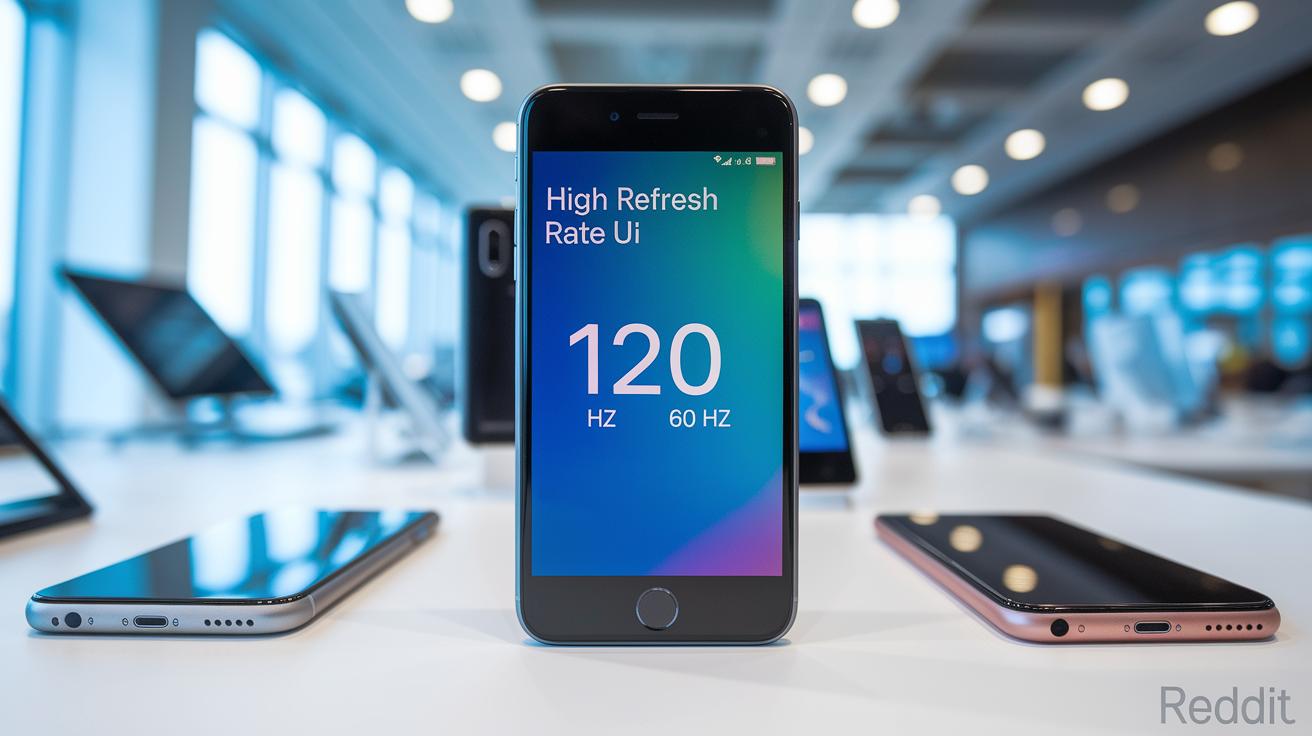
Flagship smartphones push screen performance to the max by using rapid testing techniques that highlight smooth motion and reduce lag during heavy use. For instance, the Nubia Z80 Ultra and OPPO Find X9 both feature a 120 Hz adaptive refresh rate that makes scrolling and switching between apps feel fluid and natural. This fast refresh rate ensures that even fast-moving images remain sharp and clear. On the other hand, the Poco M7 Pro runs anywhere from 60 to 120 Hz, showing the difference between entry-level and high-end performance in everyday tasks.
Tests on the OPPO Find X9 reveal a touch latency of less than 30 ms, meaning every tap registers almost immediately. Whether you're zooming in on photos or playing fast-paced games, this quick response helps eliminate input lag and keeps interactions feeling instant and engaging. Overall, clear, responsive screens paired with advanced touch sampling make flagship devices feel reliable and comfortable during daily use.
Viewing Angle, Uniformity & Outdoor Legibility in Flagship Displays
Flagship smartphones are built to impress, even under extreme viewing angles or bright sunlight. For example, the Vivo X200 Pro Mini shows over 95% panel uniformity with very little color change at a 30° angle. In practical terms, you can glance at your screen from a slight angle and still see true colors and brightness.
We also tested the OPPO Find X9 and Nubia Z80 Ultra outdoors, and both held up nicely. Their smart light sensors quickly adjust the screen brightness so that even on sunny days the display stays clear and easy to read. Imagine stepping out on a bright day and still being able to check your messages without any hassle.
All of these flagship models prove that terms like "uniformity" and "brightness" are more than just buzzwords. With even panels and sensors that detect light levels, these screens work hard to deliver clear visuals from any angle, in any lighting.
Final Words
In the action, we broke down resolution, brightness, color accuracy, contrast, and refresh rates. We compared models like the OPPO Find X9 and Nubia Z80 Ultra, showing real-world performance in varied light conditions. This flagship smartphone display quality review offers clear insights on visual performance that matter in day-to-day use and under challenging outdoor conditions. The practical, hands-on tests help highlight which devices deliver true display excellence for your needs. The review leaves us with a positive outlook for top-tier flagship displays.
FAQ
What distinguishes flagship smartphone display quality reviews for Samsung, iPhone, and Huawei?
These reviews emphasize that Samsung, iPhone, and Huawei offer ultra-sharp, bright, and color-accurate displays that deliver immersive visuals, combining cutting-edge panel technology with premium build quality.
What is the best smartphone display ranking in the world?
Display rankings are based on resolution, brightness, color accuracy, and contrast, with top models like Vivo X200 Pro Mini, OPPO Find X9, and Nubia Z80 Ultra leading the list due to their impressive panel performance.
What are the top 10 mobile display types?
Top mobile display types include AMOLED, OLED, IPS-LCD, LTPS, Super AMOLED, and emerging variants, each offering different benefits in brightness, color reproduction, and power efficiency to suit varied user needs.
Which display is better: AMOLED, OLED, or LCD?
AMOLED, a type of OLED, generally outperforms LCDs by offering deeper blacks, higher contrast, and more vibrant colors, making them the preferred choice for flagship smartphones that demand superior image quality.
Which is the highest quality display?
The highest quality displays feature ultra-high resolution, exceptional brightness, true-to-life colors, and near-infinite contrast, characteristics typically found in flagship devices that use advanced panel technology.
What is special about flagship phones?
Flagship phones are special because they integrate state-of-the-art processors, premium build materials, top-of-the-line cameras, and leading display technologies that together enhance every aspect of user experience.
Which smartphone brand has the best quality?
Quality can vary, but brands such as Samsung, Apple, OPPO, and Vivo consistently deliver exceptional flagship models with standout displays and overall performance that set them apart in competitive markets.