
Struggling to get that perfect selfie? While a lot of phones promise great shots, only a few truly deliver standout images every time. Here, we review eight models that blend smart hardware with innovative AI to capture natural skin tones and lively group photos. We even looked at details like aperture (the lens opening that lets in light) and focal length to see which devices perform best in low light. Ready to see which phones can transform your everyday selfies into something exceptional? Let’s dive in and compare the models that make every snap a picture-perfect moment.
Best selfie camera phone Shines in Every Snap
We have put together a list of eight top selfie camera phones that deliver great results every shot. To choose these models, we reviewed important specs like aperture (the lens opening that lets in light) and equivalent focal length, which help determine how well the camera performs in different lighting. These phones range from a wide-open f/1.9 aperture to the slightly smaller f/2.5, ensuring you get clear details, accurate skin tones, and fast autofocus for those lively group selfies.
| Model | Aperture & Focal Length | Notable Selfie Feature |
|---|---|---|
| iPhone 15 Pro Max | f/1.9, 23 mm | Natural skin tone capture |
| Galaxy S24 Ultra | f/2.2, 26 mm | Great for wide-angle group shots |
| Pixel 8 Pro | f/2.2, 20 mm | Smart AI for portrait details |
| Xiaomi 14 Ultra | f/2.0, 22 mm | High dynamic range images |
| Sony Xperia 1 VI | f/2.0, 24 mm | True-to-life color reproduction |
| Honor Magic 6 Pro | f/2.0, 22 mm | Detail-enhancing sensor |
| OnePlus 12 | f/2.4, 21 mm | Quick autofocus for action shots |
| Tecno CAMON 30 Premier 5G | f/2.5, 25 mm | Budget-friendly 32 MP front sensor |
These phones show that excellent front-facing photography is not just about fancy marketing. Each of these models pairs smart hardware with clever AI enhancements that adjust to everyday conditions. For example, the iPhone 15 Pro Max brings out natural skin tones, the Galaxy S24 Ultra is built for capturing vibrant group selfies, and the Pixel 8 Pro fine-tunes each image with its advanced computational skills. If you want a broader look at overall camera performance, our review titled "best camera smartphone" covers that in more detail. Every model here is set to ensure your selfies always come out looking great.
Essential Selfie Camera Phone Features to Watch
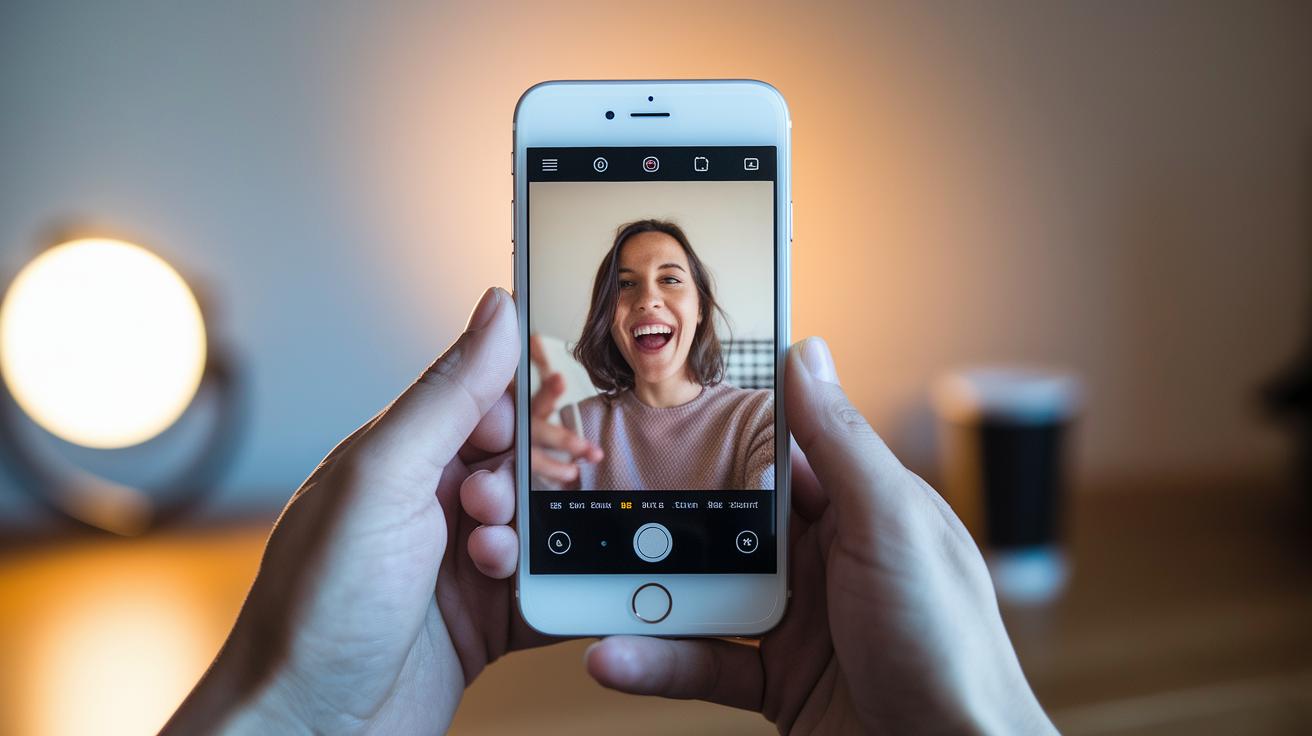
Smartphones with front sensors that know how to snap impressive selfies blend smart hardware with clever software. They bring together quality optical parts and advanced processing so every selfie looks sharp, natural, and ready to share.
Aperture & Focal Length
The camera’s aperture, usually between f/1.9 and f/2.2, lets in plenty of light even when it's not super bright. A focal length around 20-26 mm delivers a natural view that works great for both solo snaps and group selfies.
Sensor Resolution & Pixel Size
Higher sensor resolution teamed with effective pixel binning means your photos capture more detail while keeping noise to a minimum. Bigger pixel sizes help record more light, so your shots come out crisp whether you're outdoors or inside.
AI & Computational Photography
Smart camera software works on the fly to adjust colors, smooth skin tones, and boost dynamic range. This means the software balances your face with the background to create consistent and lifelike selfies every time.
Night Mode & Low-Light Algorithms
When the lights go down, dedicated night modes kick in. They merge several frames to brighten your selfie without losing detail, even in low-light conditions. Your face stays clear and well-lit, no matter how dark it gets.
Close-Focus & Autofocus Speed
Some front cameras support close-focus shooting, letting you capture standout details even at distances as close as 8 cm. Fast phase-detect autofocus means those quick selfies stay sharp, so you don't miss a moment.
Lighting Conditions and Selfie Camera Phone Performance
Selfie cameras have to deal with all kinds of lighting, and how well they work can change a lot depending on where you are. In our tests, phones with special night modes and the ability to merge several frames really shine in low-light settings. They use smart AI to balance brightness and contrast so that even when the light isn't ideal, your selfie still looks natural. Whether you're taking a quick self-portrait or a group shot, your phone is designed to adjust quickly for consistent results.
- Bright daylight: Extra light can cause harsh shadows and glare, so smart software steps in to balance exposure.
- Indoor artificial light: Changing light colors and lower brightness can affect clarity, but software helps keep colors accurate.
- Low-light or night settings: With little light available, merging several images helps reduce noise and bring out details.
- Backlit scenes: When the background is brighter than the subject, adjustments ensure your face doesn't turn into a silhouette.
Many top models handle these challenges with ease. Apple and Samsung phones, for instance, use AI to keep skin tones natural and exposure on point even when the light is not perfect. Google devices add real-time tweaks that enhance contrast and detail, ensuring you stay in sharp focus. Overall, these smart features work together to give you clear, balanced selfies no matter the lighting conditions.
Top Budget-Friendly Selfie Camera Phones

Smart design and clever software make it possible to take standout selfies without emptying your wallet. Budget phones now pack features like advanced computational photography and precision-tuned lenses so you can snap clear, detailed self-portraits and group shots without paying a premium.
Take the Google Pixel 9a for example. It borrows many selfie strengths from the Pixel 9 series, thanks to its impressive 48 MP front sensor. This sensor captures sharp images and can focus as close as 8 cm, which is perfect for those tight close-up shots. It also offers a 2–3× sensor-crop zoom that helps frame your picture beautifully while keeping noise to a minimum. Smart sensor calibration and advanced image processing ensure your selfies deliver vivid colors and natural skin tones, qualities you’d normally expect only from high-end phones.
If you're looking for a wallet-friendly option that still offers quality selfies, the Pixel 9a is a great pick. It combines advanced camera hardware with smart software to give you reliable and vibrant portraits without the high price tag.
Pro Settings and Techniques for Flawless Selfies with Your Phone
Start by nailing your composition. Open your phone’s grid overlay to line up your face perfectly. Natural light, such as soft daylight or diffused indoor light, brings out your features and minimizes distractions so your face stays the focus.
Next, fine-tune your camera settings. Try using HDR (which balances bright areas and shadows), portrait mode, and even manual exposure adjustments. Portrait mode keeps your features crisp while softly blurring the background, ensuring every detail looks true to life.
Finally, give your selfie a little extra polish with post-capture tweaks. Use built-in filters, sharpening tools, and skin smoothing options to perfect your image. These small adjustments can make your selfie look professional, so you can share it confidently without needing major edits later.
Selfie Camera Phone Value and Pricing Breakdown

Smartphone selfie cameras fall into different pricing brackets, each mixing unique hardware and software features to make your selfies look great. In the premium group, priced over $1000, you get models like the iPhone 16 Pro at $1000 and the S25 Ultra around $1049. These phones come with top-notch optics, precise focus, and smart AI that brings out natural skin tones even in tricky lighting. Their higher price reflects the quality build and detailed low‑light performance.
The flagship tier sits between $800 and $1000. Phones like the Pixel 9 Pro and Pixel 9 Pro XL, usually priced from $800 to $850, strike a solid balance between performance and affordability. They use smart computational photography to power features like portrait mode and multi‑frame merging, offering reliable performance without pushing you into the premium price range.
Midrange options, with prices from $500 to $800, include devices such as the Pixel 9 at $629 and the more budget-friendly Pixel 9a under $500. These models offer reliable selfie capabilities, solid image quality, and thoughtful processing techniques. And since the market is always evolving, keep an eye on upcoming trends, best smartphone camera 2025 projections hint at changes in features and pricing.
FAQs on Choosing the Best Selfie Camera Phone
If your selfies come out blurry or the camera app closes unexpectedly, start by giving the lens a gentle clean with a microfiber cloth. Check for any available software updates and try restarting your phone, as these steps often clear up minor glitches. If your photos still look out of focus, consider toggling the front flash or switching between selfie modes to help pinpoint the problem.
When the lighting around you changes, you can manually adjust settings like exposure, white balance, and focus to improve your selfies. Using a grid overlay can make it easier to line up your shot. For instance, if indoor photos feel too dark, try boosting the exposure a little and using a timer to keep the shot steady.
Software updates can make a big difference in how your selfie camera performs. They often enhance image processing, making colors more accurate and reducing noise, especially in low-light conditions. Many users have noticed that after an update, skin tones appear more balanced and there’s less grain in their selfies.
Keeping your selfie camera in good shape is quite simple. Regularly wipe the lens with a soft cloth and ensure your camera app stays updated. These steps prevent smudges and fix small software issues before they become a problem. A gentle swipe before you head out can help keep your photos clear and detailed.
When comparing selfie cameras from different brands, look for tests that cover the essentials: consistent exposure, accurate colors, and strong low-light performance. A side-by-side chart that compares features like resolution, sensor size, and extra capabilities can be very useful in identifying which phone delivers the best selfies.
Final Words
In the action, we reviewed top selfie cameras by comparing flagship specs, lighting performance, and pricing tiers. We shared insights on key features like aperture, sensor resolution, and night modes. Our guide also offered tips to optimize your shot, providing a well-rounded look at each model’s strengths. This recap reinforces our commitment to practical advice and real-world testing. Our roundup shows that if you’re on the hunt for the best selfie camera phone, there’s a smart choice waiting for you. Enjoy capturing your best moments!