
Ever wonder if your smartphone can capture photos that look professional? By 2026, AI camera tech boosts image quality like never before. Top smartphones now pack smart features that help you snap impressive photos every single time. In this review, we examine gadgets like the Galaxy S25 Ultra, the Pixel 10 Pro, and the iPhone 17 Pro Max. We explain how advanced software works seamlessly with solid hardware to deliver clear, detailed photos, even in low light. Get ready to see everyday photography from a brand-new perspective.
Top AI Camera Smartphones: 2026 Models and Specs
These top smartphones blend advanced AI with powerful hardware. Take the Galaxy S25 Ultra, for example. It uses a faster chipset and improved cooling to keep its performance steady during long photo sessions. Its Galaxy AI even pops out a sidebar for Writing Assist and generative image editing, making your photos look nearly professional.
The Pixel 10 Pro series also makes a strong impression with its Gemini platform. It comes with features like Gemini Live, Magic Cue, and Camera Coach. Plus, its 50MP Portrait Mode captures fine details so your portraits are sharp and vibrant.
For Apple fans, the iPhone 17 Pro Max brings a unique camera bar that spans the device. With 4× optical zoom and 8× lossless digital zoom, along with enhanced AI in iOS 26, everyday photos look professionally lit and composed.
The Nothing Phone 3a offers smart features like Circle to Search, Gemini Live, and a dedicated Essential Space button. It sports a faster chipset and an extra rear lens while keeping the experience user-friendly and accessible.
| Model | AI Camera Highlights | Chipset | Price |
|---|---|---|---|
| Galaxy S25 Ultra | Galaxy AI with a pop-out sidebar (Writing Assist, generative image editing) and an enhanced ultrawide camera | Faster chipset with improved cooling | Premium |
| Pixel 10 Pro | Gemini Live, Magic Cue, Camera Coach, and a 50MP Portrait Mode | Top-tier chipset | High-end |
| iPhone 17 Pro Max | Device-spanning camera bar, 4× optical and 8× digital zoom with expanded AI | A19 Pro silicon | Premium |
| Nothing Phone 3a | Circle to Search, Gemini Live, Essential Space button, plus an additional rear lens | Faster chipset | Affordable |
AI Camera Technology in Smartphones: Computational Photography and Scene Recognition

Smartphone cameras today use AI like a smart assistant. It learns and improves photos over time without you needing to fiddle with settings. This blend of optical magic and digital computing makes your pictures look natural and detailed. For example, when you capture a busy street scene, the AI automatically spots moving people, vehicles, and backgrounds, then adjusts the exposure, color, and focus to make every part of the picture clear.
The camera also uses scene recognition to figure out what you're shooting, whether it's people, pets, food, or wide landscapes. Once it figures that out, it quickly adjusts its settings on the fly. So during a family picnic or dinner party, every shot comes out balanced and vibrant without you having to do a thing.
Another trick is dynamic image processing. The camera takes several shots and compares them, cutting down on noise and making details sharper, much like a painter refining a sketch with each brushstroke. Fun fact: Early cameras used simple algorithms that barely recognized a human face, but today’s smartphones can tell apart tiny details. This mix of computational photography and smart scene detection consistently produces impressive photos, even when the lighting isn't ideal.
Low-Light and Image Quality: AI-Powered Night Mode on Smartphones
Top-end smartphones now use AI-powered night mode to capture clear and vivid photos even when it’s dark. These cameras take several shots at different exposures and use smart algorithms to reduce grain and noise, making each photo look clean and natural, without over-brightening the scene. For example, when you take a picture of a city skyline at night, the AI automatically adjusts exposure to balance bright areas and dark shadows so details remain crisp and true to life.
This AI technology also speeds up image processing by quickly testing different light settings on the fly until it finds the best one. It even detects what you’re focusing on and adjusts the background lighting accordingly. In short, these smart systems let you take professional-looking low-light photos with almost no extra effort.
| Phone | Low-Light Feature | Performance Rating |
|---|---|---|
| Galaxy S25 Ultra | Multiple exposure blending and dynamic lighting correction | Excellent |
| Pixel 10 Pro | Optimized night mode with noise reduction algorithms | Very Good |
| iPhone 17 Pro Max | Enhanced night mode with adaptive light balancing | Excellent |
Portraits and Selfies: AI Portrait Mode and Selfie Optimization on Smartphones
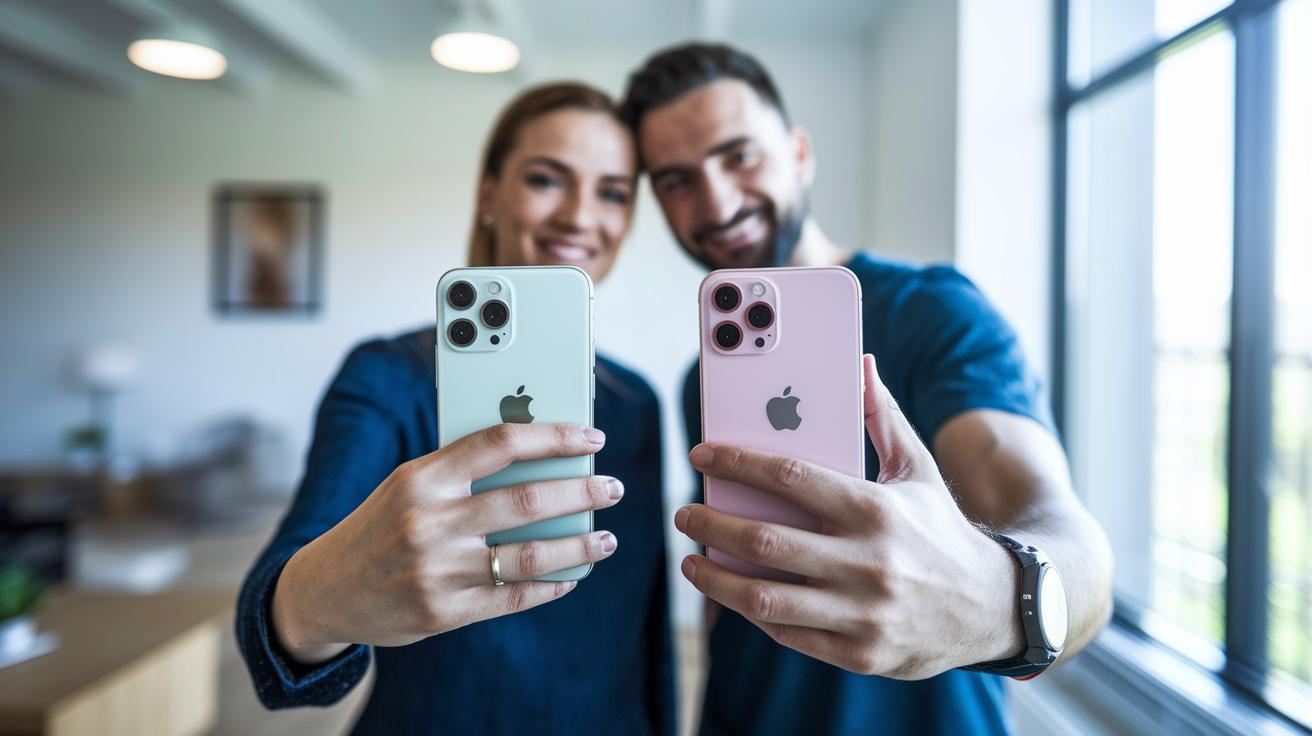
Smartphone AI helps you capture great selfies by smoothing skin, brightening eyes, and blurring out busy backgrounds. It smartly separates you from the scene, ensuring that every detail of your face stands out.
Take the Pixel 10 Pro for example. Its 50 MP Portrait Mode clearly separates the subject from the background so that every facial detail is sharp. The iPhone 17 Pro Max goes further with adjustable Portrait Lighting that lets you control shadow levels and mimic professional studio lighting to keep skin tones natural. Meanwhile, the Galaxy S25 Ultra applies advanced depth mapping and bokeh simulation to create a softly blurred background that naturally highlights you.
AI also tweaks the exposure as you snap your shot. Whether you’re in bright sunlight or a dim room, it gently adjusts brightness and contrast to avoid harsh shadows. This smart behavior means that even in less-than-ideal conditions, your selfies come out evenly lit and true to life.
In short, whether you're posting on social media or simply capturing a quiet moment, this AI-powered portrait mode elevates your photography with natural detailing and balanced lighting.
Video and Telephoto: AI Video Stabilization and Zoom Enhancements in Smartphones
Real-time AI stabilization smooths out handheld videos so your footage stays steady even when you're on the move. Using adaptive focus technology, your smartphone automatically tracks your subject to keep them sharp and in focus. This means that whether you're filming a busy event or following a moving object, the camera adjusts in real time to keep the subject clear in the frame.
The Galaxy S25 Ultra has taken ultrawide improvements a step further. It actively works to reduce hand shakiness, so even the slightest jitters won't ruin your shot. Everything is captured in clear detail without any loss in video quality. Meanwhile, the iPhone 17 Pro Max raises the bar by combining a 4× optical zoom with an 8× lossless digital zoom. This powerful combo lets you take detailed close-ups without the usual drop in quality that often comes with digital zoom.
The Pixel 10 Pro also offers a smart addition with its Camera Coach feature. It helps guide your framing and tracking, ensuring every video is well composed from start to finish. Together, these advanced features deliver excellent AI-driven video stabilization and zoom capabilities for sharper, more engaging videos.
Buying Considerations: How to Choose a Smartphone with AI Camera Features

When you're searching for a smartphone that offers smart AI camera features, start by checking its processing power. A strong chipset paired with an efficient cooling system means the phone can handle tough AI tasks quickly, ensuring smooth focus and real-time exposure adjustments during long photo sessions or video recordings.
Battery life is another key factor. Look for phones that use power wisely for AI tasks so you can snap photos all day without worrying about running out of juice. Some models even let you process AI features on the phone itself, which keeps your data local and boosts privacy.
Also, consider whether you'll need any subscription services. Some extra smart photo tools might require a monthly fee, which can be useful if you need extra storage or more editing options. However, for most users, the built-in functions will do just fine.
Finally, be sure to check out real-world reviews. Seeing how a phone performs over weeks of daily use can give you a clear picture of its AI camera reliability in different conditions.
Final Words
In the action, we broke down how leading models deliver standout imaging features. We explored how enhanced low-light performance brightens dark scenes, AI refinement smooths portraits, and stabilizes video in real time. We also compared chipsets, battery life, and privacy controls to guide you on a smart purchase decision. This review gives you a solid overview of what to expect from a smartphone with ai camera. Enjoy capturing your best moments and making a choice that truly fits your everyday needs.
FAQ
Q: What is the best smartphone with AI camera features?
A: The best smartphone with AI camera features uses scene recognition and computational photography for improved images. Models like the Galaxy S25 Ultra, Pixel 10 Pro, and iPhone 17 Pro Max deliver top-notch performance.
Q: Do phone cameras have AI functionality?
A: Phone cameras use AI to analyze scenes in real time. They automatically adjust focus, exposure, and color, ensuring sharper images and enhanced low-light performance without manual settings.
Q: Which smartphones offer the best AI features and imaging?
A: Smartphones like the Galaxy S25 Ultra, Pixel 10 Pro, and iPhone 17 Pro Max combine advanced processors with AI to deliver features like dynamic image processing and smart portrait modes for higher quality photos.
Q: Where can I find a comprehensive list of AI mobile phones?
A: You can find a detailed list on tech review sites that compare models by AI capabilities, chipset performance, and camera features, helping you choose a device that fits your needs.
Q: Are there phones without AI features in 2025?
A: Most new smartphones incorporate AI functionalities. However, a few lower-end models might offer limited AI assistance, so checking detailed specs is recommended.
Q: Which AI camera tends to be the best overall?
A: The best AI camera depends on your priorities. High-end options like the iPhone 17 Pro Max and Galaxy S25 Ultra provide robust features for versatile use, while other models emphasize specialized functions.
| Model | AI Camera Highlights | Chipset | Price |
|---|---|---|---|
| Galaxy S25 Ultra | Enhanced ultrawide, AI sidebar for editing, tougher display | Faster processor | Coming Soon |
| Pixel 10 Pro | Gemini platform with Camera Coach and 50 MP Portrait Mode | Gemini chipset | TBD |
| iPhone 17 Pro Max | Device-spanning camera bar, 4× optical zoom, expanded AI features | A19 Pro silicon | Premium |
| Nothing Phone 3a | Additional rear lens, Circle to Search, AI live features | Fast chipset | Competitive |
| Phone | Low-Light Feature | Performance Rating |
|---|---|---|
| Galaxy S25 Ultra | AI-powered night mode with noise reduction | 9/10 |
| Pixel 10 Pro | Multi-exposure and algorithmic brightness enhancements | 8/10 |
| iPhone 17 Pro Max | Balanced exposure with natural color preservation | 9/10 |