
Ever been on a run and felt unsure of your route even with your phone? Imagine a fitness tracker that maps your path and monitors your heart rate all on its own. With built-in GPS that reliably works out in the open, you can hit the trail without worrying about weak signals or lost data. In this review, we highlight the top tracker that stays true to your fitness needs, whether you're hiking, jogging, or training for a race. Read on to discover which model delivers clear and trustworthy insights every step of the way.
Essential Benefits of a Fitness Tracker with Built-in GPS
Imagine hitting the trail without worrying about losing your phone signal. A built-in GPS means the tracker takes care of everything on its own, capturing your route and pace in real time. Its onboard navigation system records every step and turn, while the precise heart rate sensor keeps an accurate read on your pulse, even if you're not using your phone.
When you wear a tracker with an integrated health monitor, you get reliable cardio and gym metrics without any phone distractions. This self-contained design ensures your workout data is consistent whether you're indoors or outside. Every step, turn, and change in elevation is captured, giving you clear insights into your performance.
Benefits include:
- Real-time route mapping
- Accurate pace detection
- Standalone operation
- Improved elevation readings
- Auto-activity detection
- Enhanced heart-rate tracking
- Easy data syncing
Each of these features works together to create a smooth, uninterrupted workout experience. Real-time mapping and accurate pace tracking help you see your progress minute by minute. Improved elevation readings capture the details of your hikes and runs, while standalone operation means your workout isn’t thrown off by connectivity issues. Auto-activity detection and enhanced heart-rate tracking provide precise exercise monitoring, and easy data syncing lets you review your stats right away, all designed to help you reach your fitness goals, whether you’re training for a race or just keeping active every day.
Comparing Top Fitness Trackers with Built-in GPS in 2025

We took these trackers outdoors and logged their GPS data every second while checking how well they track changes in elevation and sync with your heart rate. Our tests measured how precise each tracker’s GPS is during real workouts and also looked at how long they can run in full GPS mode. Below is a quick comparison of six popular models along with their standout features.
| Model | GPS Accuracy Score | Battery Life (hours in GPS) | Key Feature |
|---|---|---|---|
| Garmin Forerunner 970 | 9.3 | 25 | Advanced training metrics |
| Suunto Run | 8.8 | 18 | Rugged design for outdoor sports |
| Coros Pace 3 | 9.0 | 20 | Lightweight and responsive |
| Garmin Enduro 3 | 9.3 | 80 | Ultra-long endurance for extended events |
| Apple Watch Ultra 3 | 9.3 | 36 | Integrated ecosystem with premium design |
| Fitbit Charge 6 | 7.0 | 7 | Budget-friendly with easy usability |
When you look at these numbers, it’s all about finding the right blend of pinpoint accuracy and battery life. For example, if you’re training for long events or need detailed performance metrics, a tracker with a high accuracy score and longer battery life is the way to go. If you’re just tracking everyday walks or light workouts, a budget-friendly option might be all you need.
How to Choose the Best Fitness Tracker with Built-in GPS
If you're eyeing a fitness tracker with built-in GPS, start by thinking about your main workout routines and what features will boost your training. Whether you're into running, cycling, or mixing different workouts, you want a tracker that gives you clear GPS data and easy-to-read stats throughout your exercise.
Here are some key points to keep in mind:
- GPS Accuracy: Look for options that use dual-frequency tracking for better location precision, especially in tricky areas.
- Battery Life: Check how long the tracker can run with full GPS use and see if it includes a power-saving mode for longer sessions.
- Durability: Make sure the device is built to last. A waterproof rating like 5 ATM or IP68 is ideal for heavy sweat or wet conditions.
- Sensor Suite: Ensure the tracker reliably monitors your heart rate and SpO₂ (blood oxygen) for steady health data.
- Multi-Sport Modes: A solid tracker supports different workout types and might even offer coaching features.
- Smartphone App Compatibility: It’s important that your tracker syncs effortlessly with your phone so you can review your progress with ease.
These insights help you zero in on a tracker that truly fits your lifestyle, keeping your workouts smooth and efficient.
Detailed Review: Fitbit Charge 6 with Built-in GPS
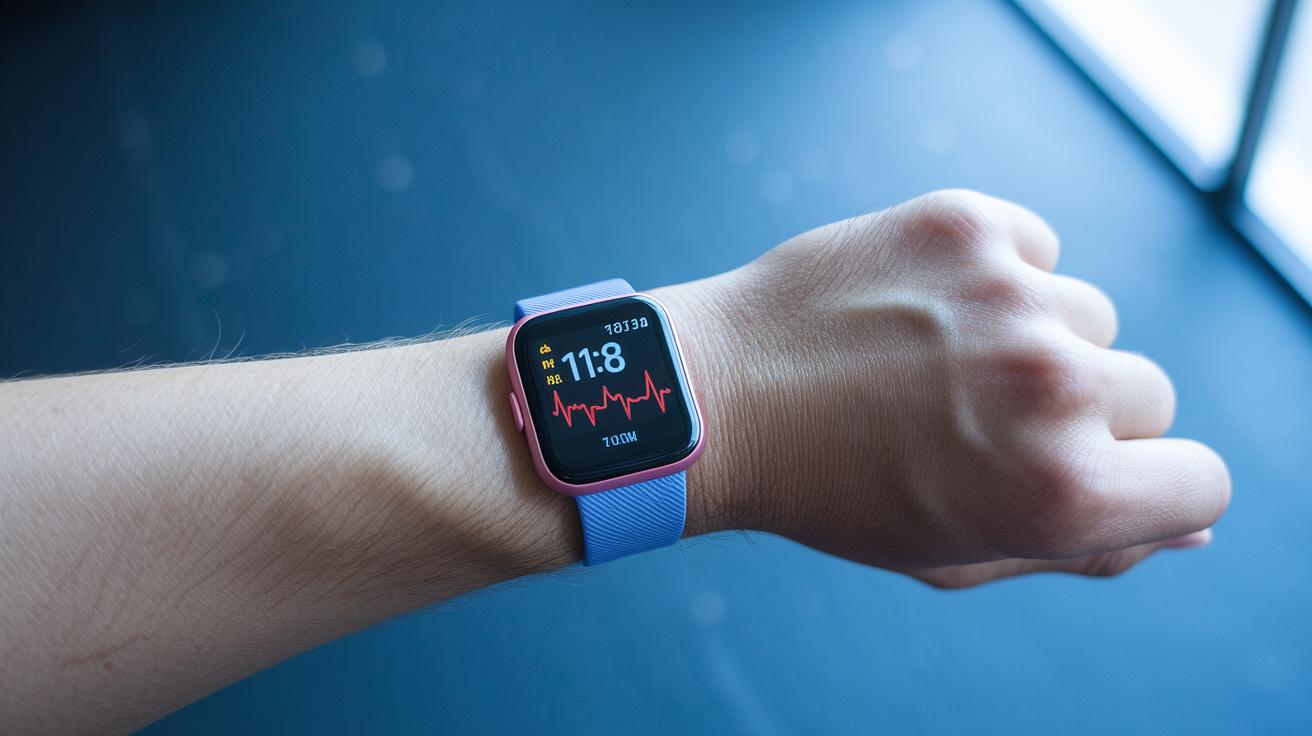
The Fitbit Charge 6 is a budget-friendly fitness tracker that comes with its own GPS, so you can go for a run or ride without carrying your phone. In our tests, it scored a solid 7.0. It keeps an eye on your heart all day, tracks your oxygen levels (SpO₂), and gives you real-time details on pace and distance. With up to 7 hours of GPS battery life, you can count on it to map your route and record key stats accurately.
We tried it out during runs and bike rides and found its onboard GPS to be reliable. It picked up on changes in pace and distance as they happened, and the heart rate sensor kept steady readings throughout varied terrains. Even on moderate slopes, it delivered clear workout data to help you understand your cardio performance.
On the user front, the Fitbit Charge 6 stands out. Its linked smartphone app neatly organizes your workout stats on a simple dashboard, making any follow-up review quick and easy. The lightweight design and comfy strap add to its overall appeal, especially for anyone on a budget who still wants a feature-packed fitness tracker with built-in GPS.
Advanced Built-in GPS Features and Activity Modes in Fitness Trackers
Today's fitness trackers are built for more than just basic GPS. They now feature All-Systems GNSS, which gives you a much clearer picture of your location. Instead of relying solely on one system, they use dual-frequency tracking to pick up signals from several satellites. This means that even if you're running under heavy tree cover or in a dense urban area, your device can still capture accurate data for your workout.
With this advanced GNSS, your tracker works independently of your phone's GPS. You can go out for a run or bike ride without needing your phone to map your route. This results in highly accurate tracking for both your route and pace.
Top-tier trackers also include special activity modes for different sports. No matter if you're trail running, open-water swimming, cross-country skiing, or mountain biking, each mode is fine-tuned to deliver the most precise performance metrics possible.
| Key Feature | Description |
|---|---|
| Dual-frequency GNSS | Tracks multiple satellite signals for better accuracy |
| On-device Topographic Maps | Displays detailed maps right on your tracker |
| Turn-by-turn Navigation | Guides you with real-time cues when following a route |
| Offline Route Import | Lets you upload and follow routes without an internet connection |
These features allow you to follow detailed routes with ease, get navigation prompts in real time, and load pre-planned courses even when you're off the grid. This level of refined mapping and tracking helps boost your performance no matter what outdoor challenge you face.
Maximizing Battery Life for Fitness Trackers with Built-in GPS
If your fitness tracker is your go-to for capturing workout data, battery life becomes crucial. Your tracker juggles GPS connectivity, sensor activity, logging frequency, screen brightness, and battery mode settings to keep you going. In our tests, some devices lasted only 7 hours (like the Fitbit Charge 6) while others, such as the Garmin Enduro 3, powered through for up to 80 hours. For those who depend on consistent data, these tips can help you stretch your tracker's run-time.
• Use power-save GPS mode (for additional tips on long battery life, check out our guide on smartwatches).
• Lower the logging frequency to cut down on battery use.
• Turn off sensors that aren’t needed during your workout.
• Dim the screen to conserve energy while tracking.
• Keep your firmware updated to enjoy the latest battery-saving improvements.
By balancing essential features with smart battery-saving settings, your tracker can deliver reliable performance even during the longest sessions.
Final Words
In the action, we explored how a fitness tracker with built in gps elevates outdoor workout tracking. We broke down its standalone accuracy, independent operation, and real-time route mapping. Our comparison of top models and review of the Fitbit Charge 6 highlighted how these devices meet everyday and athletic needs.
Tested benefits, detailed features, and battery tips come together for a clear picture. Enjoy your newfound confidence when picking the right tracker for your active lifestyle.
FAQ
What are the best fitness trackers with built-in GPS for various platforms?
The best fitness trackers with built-in GPS—such as high-accuracy models like Garmin Forerunner 970, Garmin Enduro 3, and Apple Watch Ultra 3—offer reliable route mapping, pace tracking, and compatibility even for Android users.
How reliable are fitness tracker reviews and their companion GPS tracking apps?
Fitness tracker reviews and associated apps provide clear insights into real-world performance, including accurate route mapping, pace detection, and user-friendly interfaces that help buyers understand how well these devices perform outdoors.
Is it safe to buy a fitness tracker with built-in GPS on Amazon?
Buying a fitness tracker with built-in GPS on Amazon can be safe if you check verified reviews and product details; this ensures the device offers the promised route accuracy, battery life, and sensor performance you need.
How does the WHOOP fitness tracker compare when it comes to GPS functionality?
The WHOOP fitness tracker focuses more on recovery and health metrics rather than standalone GPS mapping, making it less suited for users who need detailed outdoor route tracking compared to other GPS-enabled fitness watches.
Which Fitbit model comes with built-in GPS for accurate tracking?
The Fitbit Charge 6 includes onboard GPS, allowing it to deliver accurate real-time pace, distance, and route tracking, which is a great option for budget-friendly yet effective fitness monitoring.
Why would I need a fitness tracker with built-in GPS for my workouts?
A fitness tracker with built-in GPS is essential for outdoor activities because it independently logs your exact route, pace, elevation, and distance, ensuring you get precise workout statistics without relying solely on your smartphone.